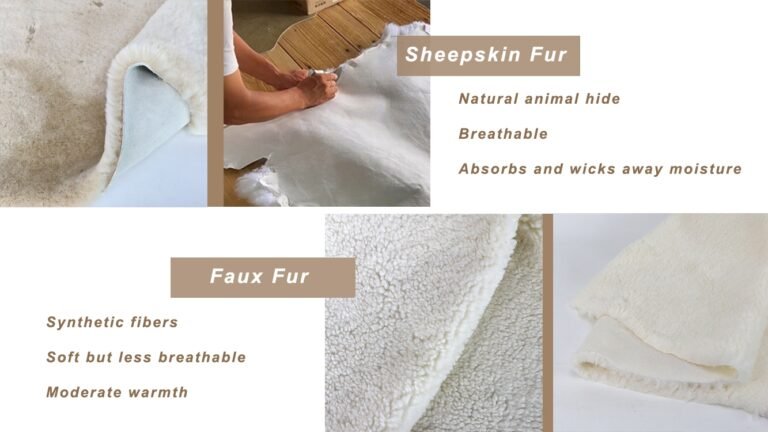
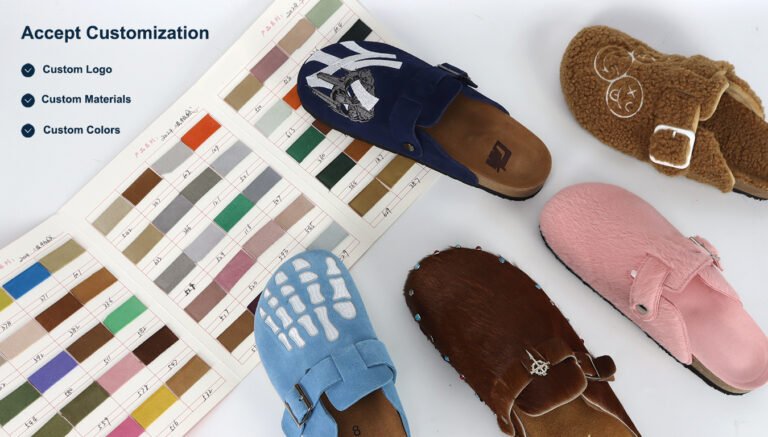
Many brands want custom slippers. Yet logo quality often disappoints. The embroidery looks cheap, placement is wrong, or the logo fades fast. I faced this problem many times with new buyers.
Embroidery logo is one of the most durable and premium branding methods for faux shearling1 slippers. It stitches the brand design directly onto the upper fabric, creating long-lasting, textured logos suitable for mid- to high-end custom slipper production.
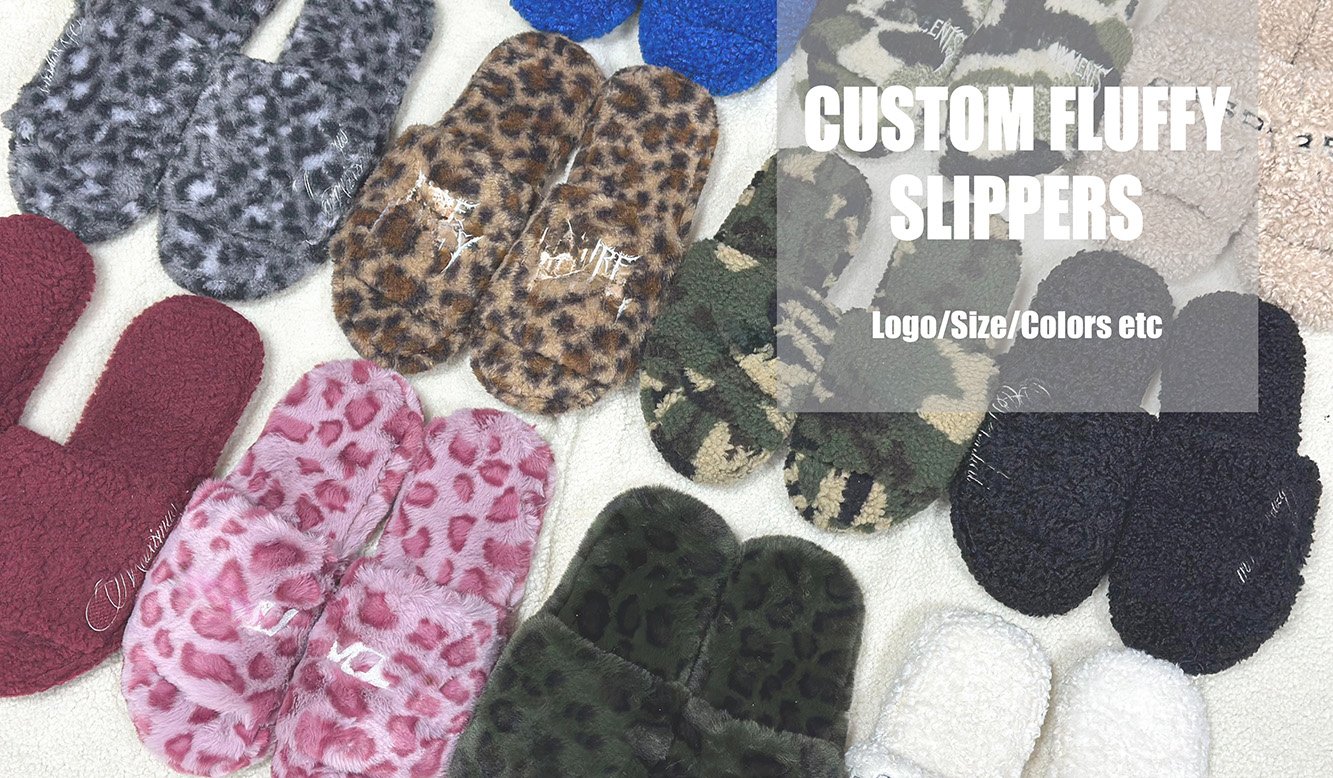
When clients first develop a custom slipper, they often focus on style and material. But logo process is just as important. The logo defines the brand feeling. Over the years, I helped many brands choose the right embroidery method for faux shearling slippers.
Why Choose Embroidery Logos for Faux Shearling Slippers?
Many slipper brands want logos that last. Printed logos fade. Heat transfer can peel. Cheap logos reduce brand value. I learned this lesson early in my sourcing work.
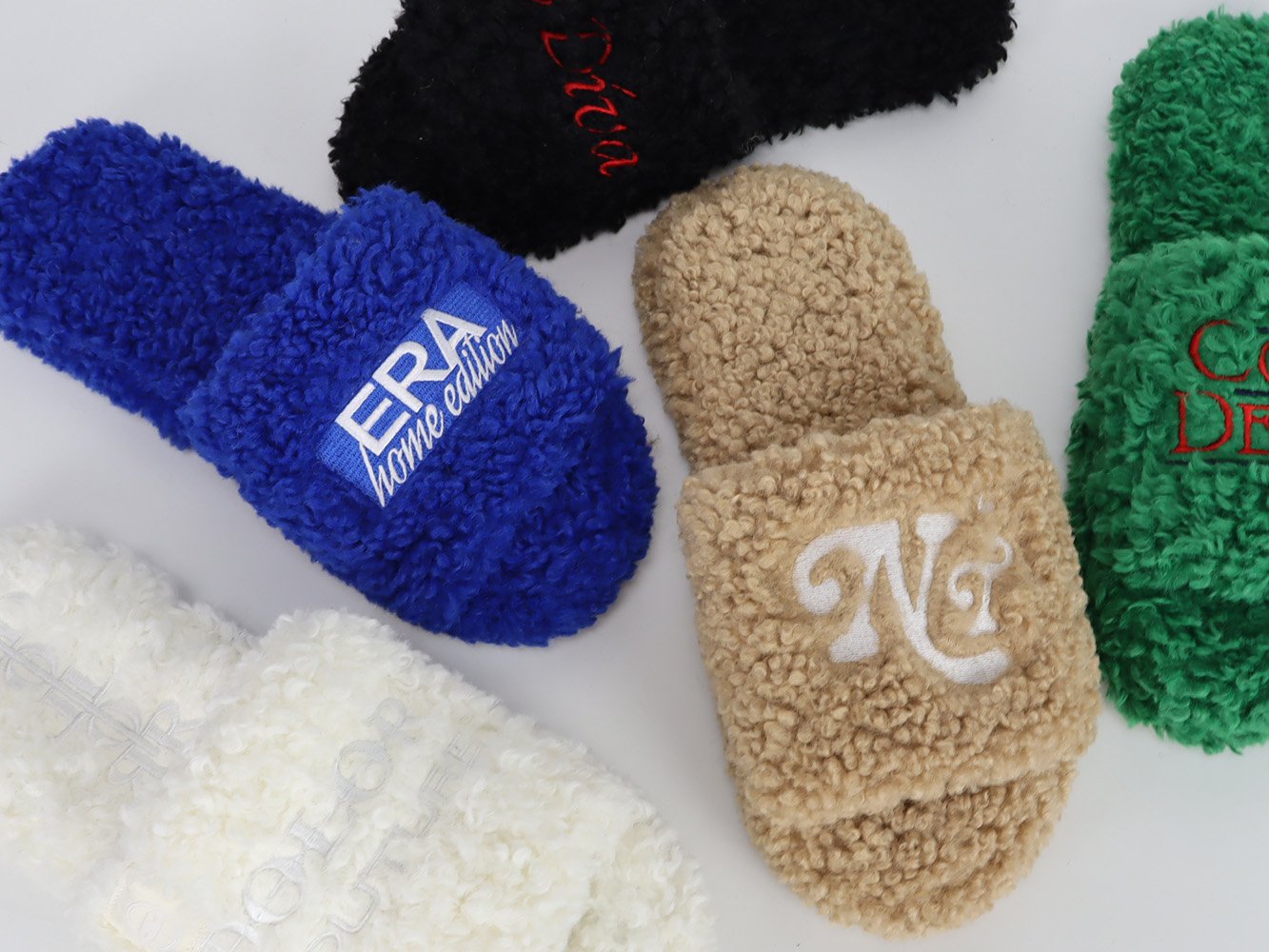
Embroidery2 logos are ideal for faux shearling slippers because they are durable, textured, and resistant to washing or friction. The stitched logo integrates with the fabric, making it perfect for premium indoor slipper branding.
Understanding the Advantages of Embroidery Branding
When I work with buyers in the US or Australia, they often ask which logo method looks more premium. In many cases, embroidery is the safest option for slippers.
Faux shearling slippers usually use suede fabric3, plush fleece, or microfiber4 uppers. These materials work very well with embroidery machines. The stitches hold firmly without damaging the fabric.
Below is a simple comparison of common slipper logo methods:
| Logo Method | Durability | Appearance | Cost | Best Use |
|---|---|---|---|---|
| Embroidery | Very High | Premium textured | Medium | Brand logos |
| Heat Transfer5 | Medium | Flat print | Low | Simple graphics |
| Metal Logo | High | Luxury look | High | Fashion brands |
| Embossed6 | Medium | Subtle effect | Medium | Minimal brands |
Embroidery stands out because it balances cost and brand appearance.
I remember a designer client from the US. She had very strict requirements for brand details. She rejected printed logos immediately. We switched to embroidery. The result looked much more refined.
Another advantage is flexibility. Embroidery can support many thread colors. This allows brands to keep their original logo style.
Factories usually create a digital embroidery file before production. This file guides the machine stitch path. Once the file is approved, production becomes very stable.
For most faux shearling slipper styles, embroidery is placed on the upper vamp area. This area is the most visible when people wear slippers at home.
How Does the Embroidery Logo Process Work in Slipper Production?
Many buyers imagine embroidery as a simple step. In reality, it involves several stages. If one step is wrong, the logo may look distorted.
The embroidery process includes logo digitization7, sampling, thread selection, positioning, machine embroidery, and quality inspection to ensure consistent branding across slipper production.
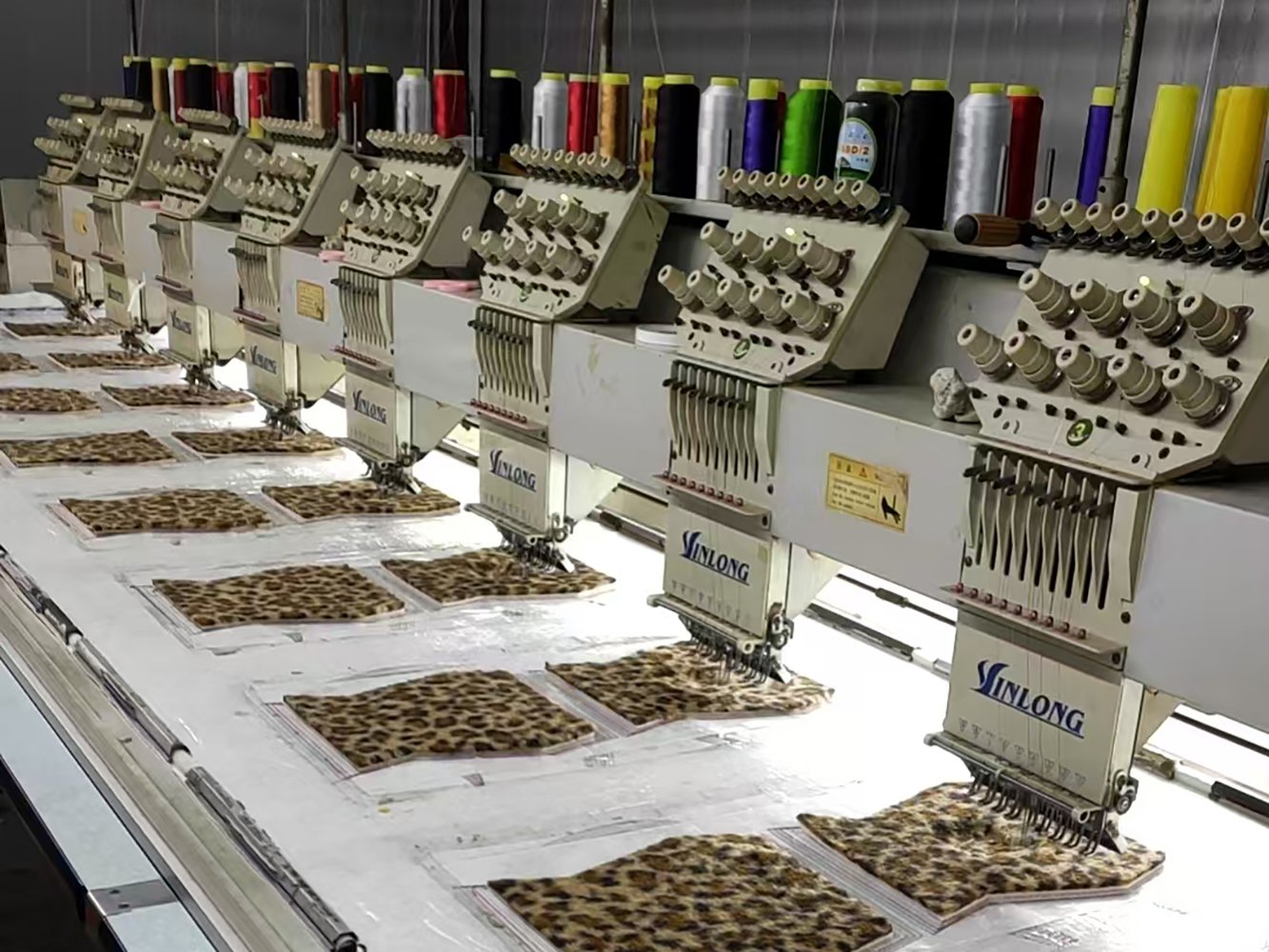
Step-by-Step Manufacturing Process
When I handle custom slipper orders, I usually guide clients through the embroidery preparation process. This avoids mistakes later.
Here is the typical embroidery workflow used by most slipper factories:
| Step | Process | Purpose |
|---|---|---|
| 1 | Logo Artwork Review | Check file quality |
| 2 | Embroidery Digitizing | Convert logo to stitch data |
| 3 | Thread Color Matching | Match brand colors |
| 4 | Sample Embroidery | Test logo result |
| 5 | Position Confirmation | Decide logo placement |
| 6 | Bulk Embroidery | Start mass production |
| 7 | QC Inspection | Ensure consistency |
The most critical step is logo digitizing.
This process converts the brand logo into machine stitch instructions. A skilled technician controls stitch density8, direction, and layering.
If digitizing is poor, the logo can look messy. Letters may become unclear. Small details may disappear.
For faux shearling slippers, we must also consider fabric thickness. The plush lining underneath can affect stitching tension.
That is why most factories embroider the upper panels before assembling the slipper. This keeps the logo flat and accurate.
I usually advise clients to approve a physical embroidery sample before bulk production. Even small logo details can look different on fabric.
Once the embroidery passes inspection, the upper panels move to the stitching line. Workers then assemble the slipper with lining, outsole, and padding.
What Logo Design Works Best for Embroidery on Slippers?
Some logos look perfect on screens. But they fail when stitched on fabric. I learned this after working with many startup brands.
Simple logos with bold lines, limited colors, and larger lettering work best for embroidery on faux shearling slippers. Complex gradients or tiny details often lose clarity during stitching.
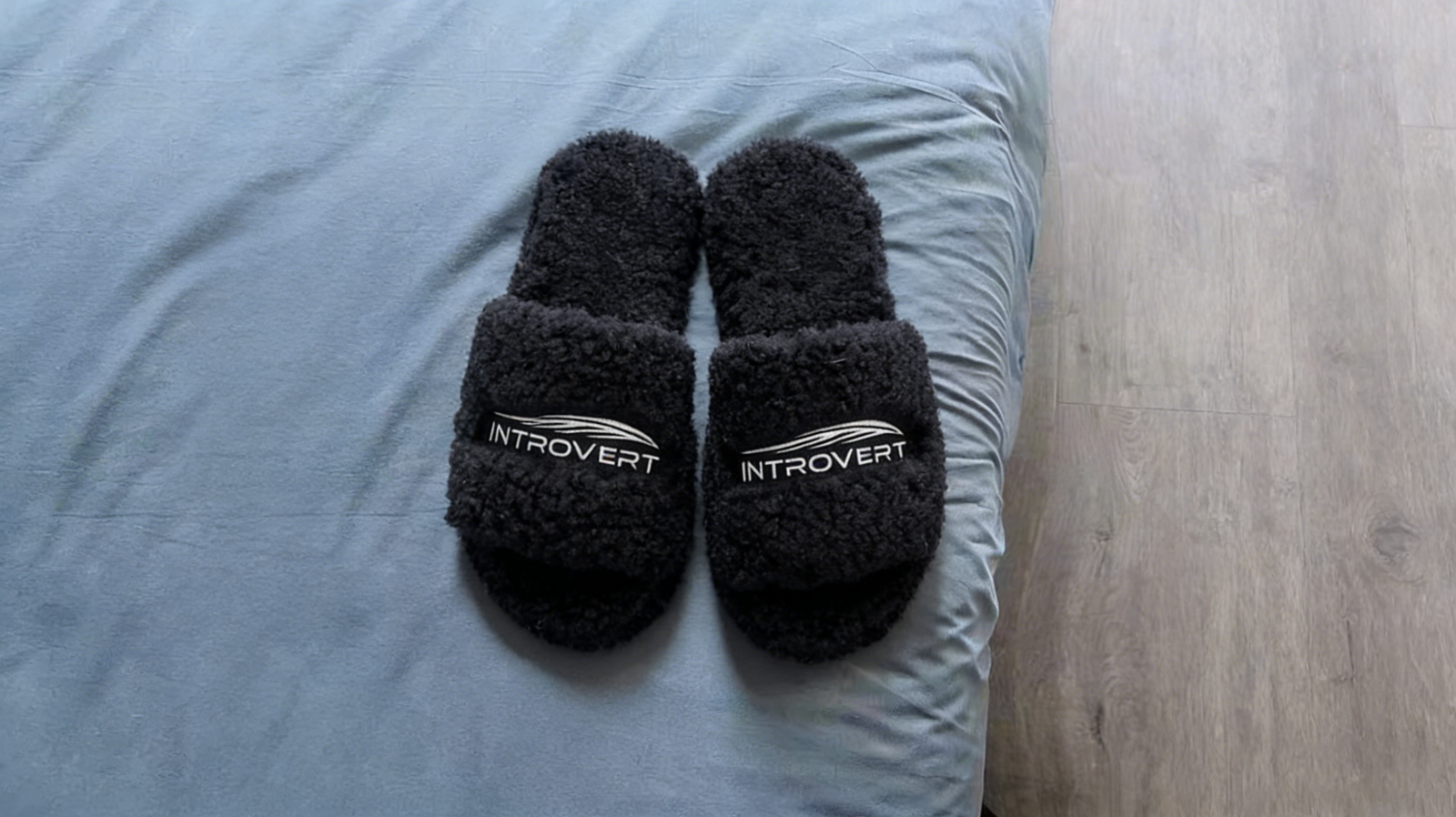
Design Guidelines for Clean Embroidery Results
When helping brands prepare logos, I often share several design tips.
Embroidery machines use threads. Threads cannot reproduce every design detail that digital graphics can.
Below are common embroidery design guidelines:
| Design Factor | Recommendation |
|---|---|
| Minimum Letter Height | 4–5 mm |
| Maximum Colors | 3–5 colors |
| Line Thickness | At least 0.4 mm |
| Avoid | Gradients and shadows |
Simple logos usually produce the best results.
For example, many lifestyle brands use a small wordmark logo. This works perfectly for slipper embroidery.
Another common option is a symbol logo placed on the side or upper area.
Placement options include:
| Placement | Common Use |
|---|---|
| Vamp center | Main brand logo |
| Side upper | Subtle branding |
| Heel area | Minimal design |
One of my clients once insisted on a very complex embroidered emblem. The sample looked crowded. We simplified the logo. The final slipper looked much cleaner.
Logo scale also matters. Oversized embroidery can make slippers look bulky. Small logos often feel more refined.
I usually recommend testing two logo sizes during sampling.
This helps the brand choose the best visual balance.
Conclusion
Embroidery logos give faux shearling slippers durable, premium branding. With proper digitizing, design simplification, and sampling, brands can achieve consistent and high-quality custom slipper production.
Faux shearling is a synthetic material designed to mimic real sheepskin shearling, commonly used in slippers and winter footwear due to its softness, warmth, and lower cost compared to natural shearling. ↩
Embroidery is a textile decoration method where threads are stitched onto fabric using machines or hand techniques to create logos, patterns, or branding. ↩
Suede fabric refers to a soft, napped leather or synthetic material often used in slipper uppers due to its smooth texture and flexibility. ↩
Microfiber is a synthetic fiber material known for its durability, softness, and lightweight characteristics, making it suitable for footwear and textile applications. ↩
Heat transfer printing is a process where a design is transferred onto fabric using heat and pressure, commonly used for logos and graphics in apparel and footwear. ↩
Embossing is a manufacturing technique that presses a design into leather or fabric to create a raised or recessed logo effect without using ink or thread. ↩
Embroidery digitizing is the process of converting a logo or artwork into a digital stitch file that embroidery machines can read and follow during production. ↩
Stitch density refers to the number of stitches used within a specific area of embroidery, affecting the texture, durability, and visual clarity of the logo. ↩