Many buyers focus on the sheepskin upper and forget the outsole. This leads to boots that feel great at first but fail in real use. I learned this the hard way.
The best outsole material for custom sheepskin boots depends on the intended use. Rubber offers the best grip and durability, EVA provides lightweight comfort, and TPR balances flexibility, traction, and cost. Each material suits different lifestyles and environments. shoe outsole materials1
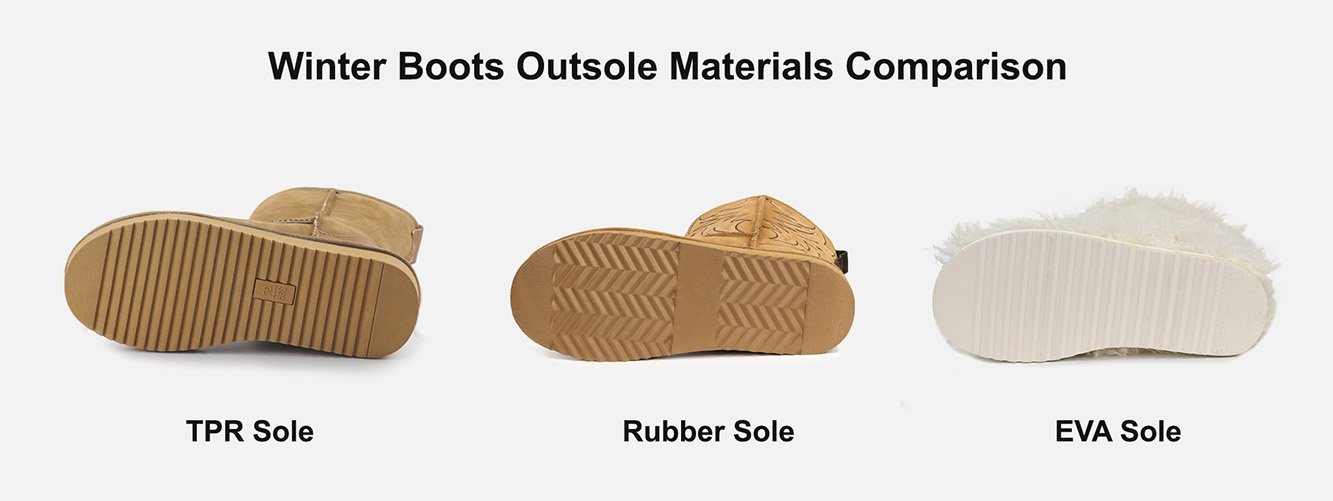
When I work with buyers on custom sheepskin boots, the outsole discussion always changes the final design. The right outsole can decide whether a boot becomes a cozy indoor slipper or a reliable outdoor winter boot.
Rubber Outsoles: The Best Choice for Durability and Grip?
Boots that look great but slip on wet ground are a nightmare. Many buyers worry about this after their first winter season.
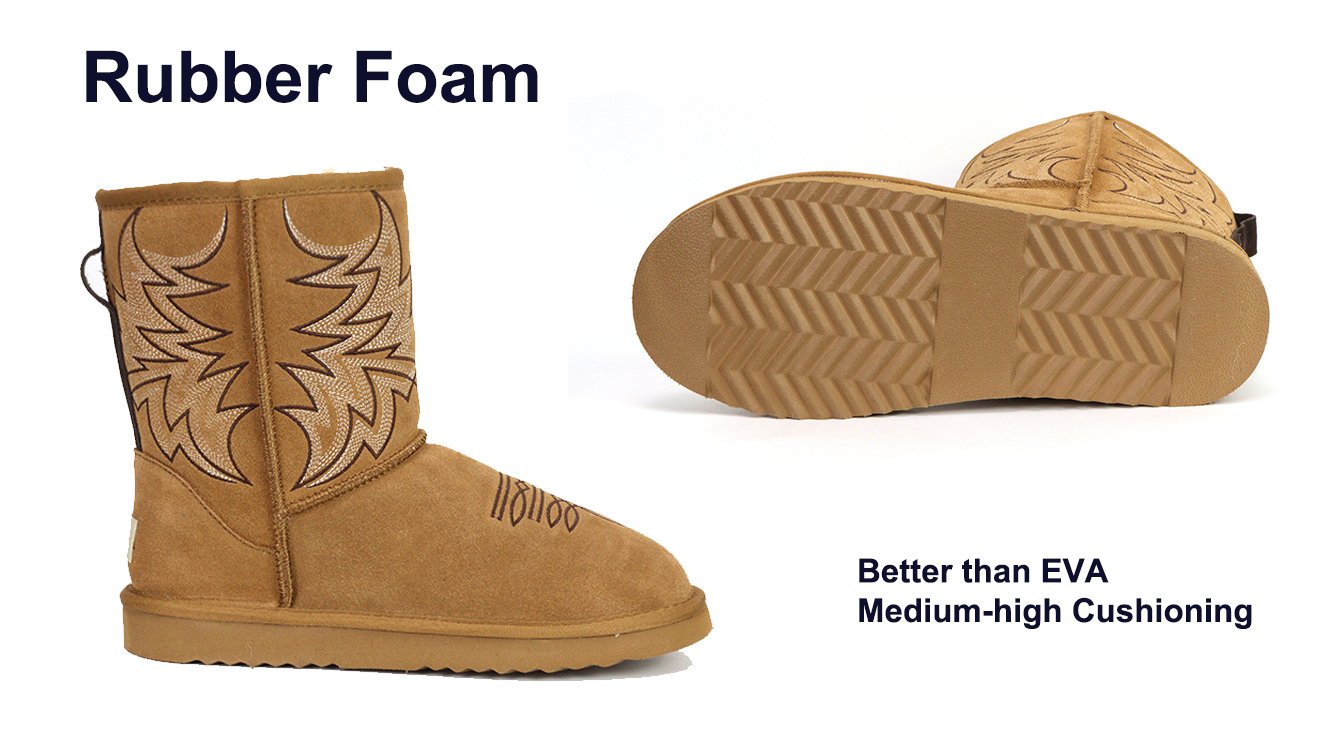
Rubber outsoles are the most durable and slip-resistant option for sheepskin boots. They provide strong traction, water resistance, and long-lasting wear, making them ideal for outdoor use and cold climates.
Why Rubber Works So Well
Rubber is often called the “workhorse” of shoe outsoles. I see many outdoor sheepskin boot designs using it for a simple reason: safety and durability.
Rubber naturally grips surfaces well. Its flexible structure allows the sole to maintain traction even on wet ground or snow. This is why hiking boots and work boots commonly use rubber traction soles2.
Another advantage is water resistance. Rubber acts as a barrier between the ground and the sheepskin upper. When paired with proper stitching and sealing, it helps prevent moisture from entering the boot through water-resistant rubber soles3.
However, rubber has some drawbacks. It is heavier than foam-based materials. This can make the boot feel bulky for indoor wear. It also increases shipping weight, which matters for some wholesale buyers.
Rubber Outsole Overview
| Feature | Performance |
|---|---|
| Durability | Excellent |
| Grip | Excellent |
| Weight | Heavy |
| Best Use | Outdoor winter boots |
In my experience, distributors targeting cold markets like New Zealand or Northern Europe often prefer rubber outsoles because customers prioritize stability in wet weather.
EVA Outsoles: The Lightweight Comfort Option?
Some buyers want sheepskin boots that feel almost like slippers. Heavy soles can ruin that experience.
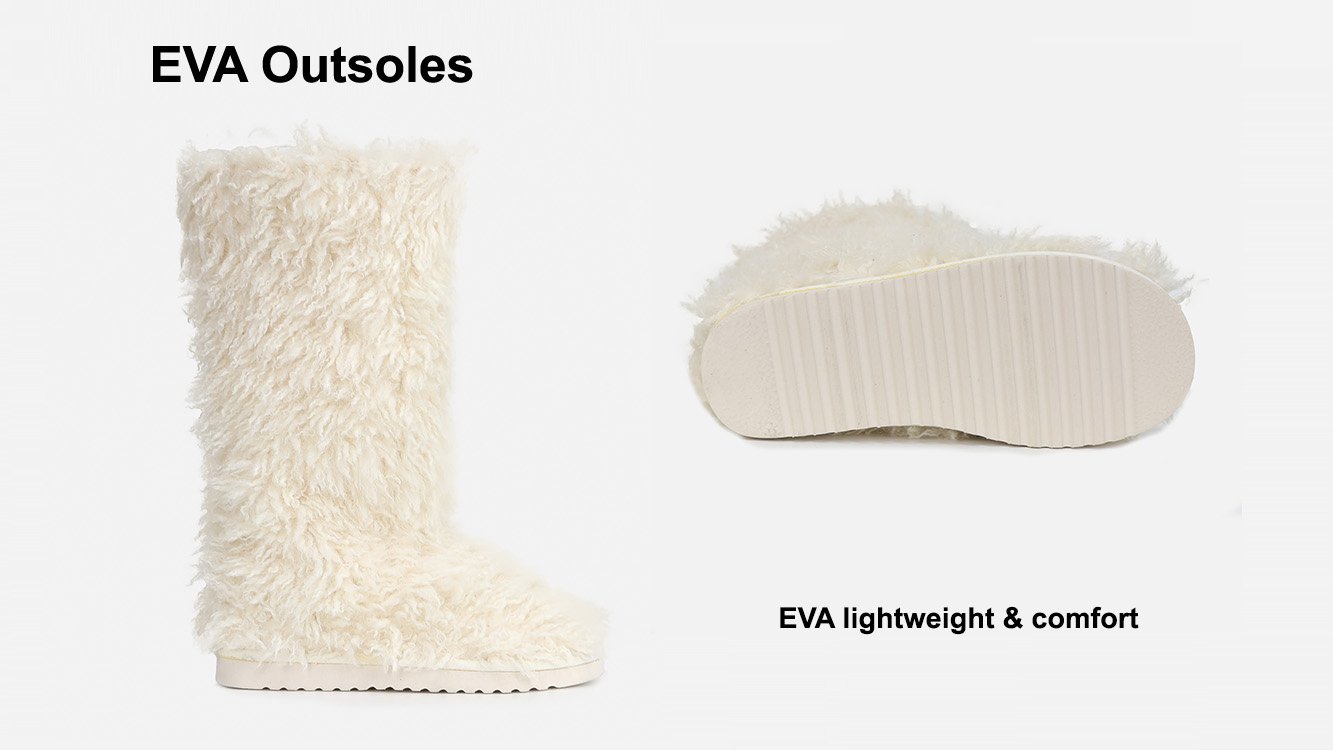
EVA outsoles are extremely lightweight and soft, offering excellent cushioning and comfort. They are ideal for indoor use or light outdoor wear but are less durable than rubber.
Why EVA Feels So Comfortable
EVA stands for Ethylene Vinyl Acetate4. It is a foam-like material widely used in athletic shoes and casual footwear. One major advantage is its weight. EVA soles are among the lightest options available, which is why many brands use EVA foam in footwear5.
When I test samples with EVA soles, the first thing I notice is the cushioning. The material compresses slightly under pressure, absorbing shock during walking. Many people describe this feeling as “walking on clouds,” thanks to the shock-absorbing cushioning of EVA6.
That comfort makes EVA perfect for:
- Indoor slippers
- Short outdoor walks
- Lightweight fashion boots
But EVA has limitations. Over time, the foam can compress and lose shape. This means the sole may wear down faster than rubber if used heavily.
EVA Outsole Overview
| Feature | Performance |
|---|---|
| Durability | Moderate |
| Grip | Moderate |
| Weight | Very Light |
| Best Use | Indoor or casual wear |
When I work with fashion brands, EVA often becomes the preferred choice because customers value comfort and lightweight design.
TPR Outsoles: The Balanced All-Rounder?
Some buyers want something between rubber and EVA. They want durability but also a lighter feel.
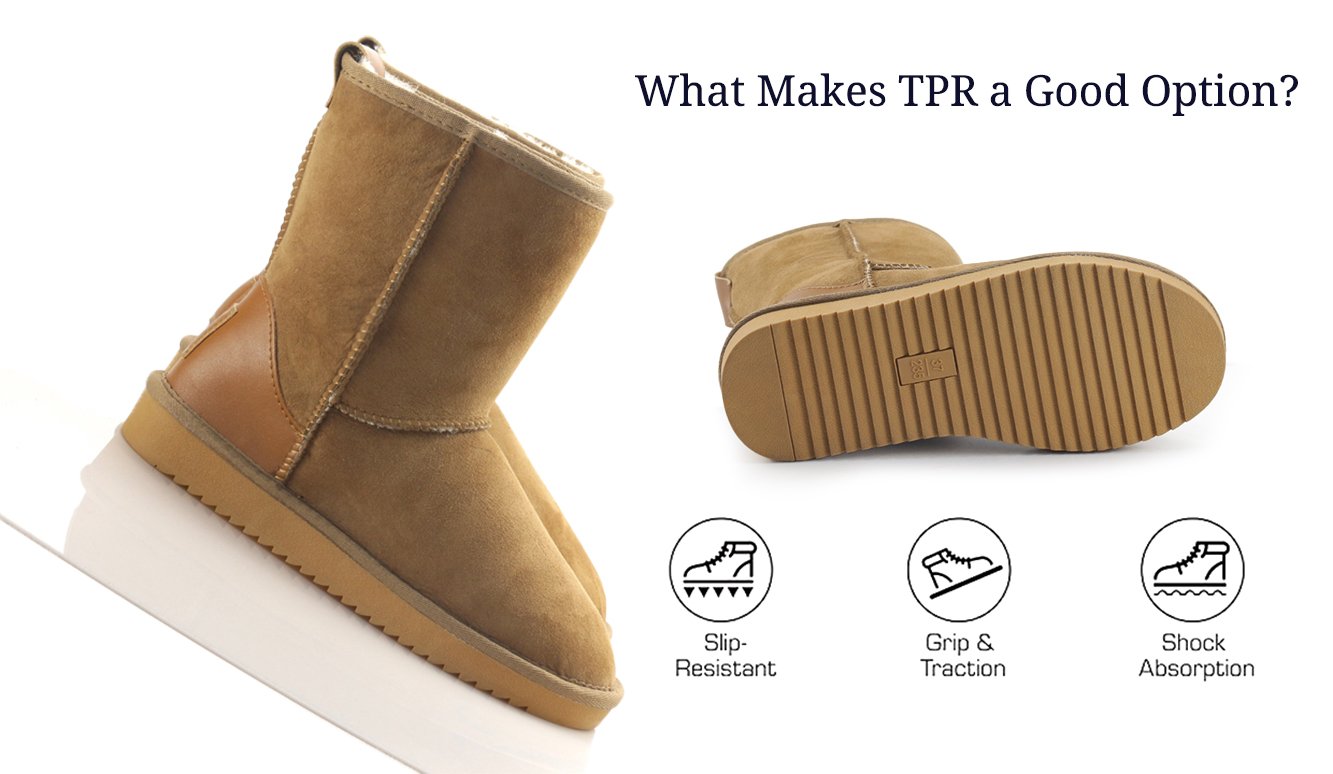
TPR outsoles combine rubber-like grip with lighter weight and flexibility. They provide good durability and traction while remaining affordable and versatile.
Why TPR Is Popular in Modern Boots
TPR stands for Thermoplastic Rubber7. It blends rubber and plastic polymers to create a flexible but durable material.
In my production experience, TPR offers a good compromise between cost and performance. It is lighter than traditional rubber but still provides decent grip and durability.
Another benefit is manufacturing flexibility. TPR works well with injection molding outsole manufacturing8, which allows factories to create complex tread patterns. These patterns can improve slip resistance and give the boot a distinctive design.
However, TPR usually feels slightly firmer than EVA. Some users notice this during long periods of walking.
TPR Outsole Overview
| Feature | Performance |
|---|---|
| Durability | Good |
| Grip | Good |
| Weight | Medium |
| Best Use | Everyday boots |
For many mid-range sheepskin boot brands, TPR becomes the default choice because it balances performance, cost, and weight.
Conclusion
Rubber offers maximum durability, EVA delivers lightweight comfort, and TPR provides balanced performance. The best outsole depends on whether the boots are designed for indoor comfort, fashion wear, or outdoor winter use.
Footnotes
Explains common shoe outsole materials and their roles in footwear performance, helping readers understand the broader category before comparing rubber, EVA, and TPR. ↩
Explains why rubber soles provide strong traction on wet or slippery surfaces, reinforcing the article’s claim about rubber’s grip advantages. ↩
Provides information about how rubber soles resist water and help prevent moisture from entering footwear. ↩
Defines Ethylene Vinyl Acetate (EVA) and explains why it is widely used in footwear manufacturing. ↩
Explores the advantages of EVA foam in shoes, including its lightweight structure and flexibility. ↩
Explains how EVA foam absorbs shock and creates soft cushioning, supporting the “walking on clouds” description. ↩
Defines thermoplastic rubber (TPR) and explains how it differs from traditional rubber or plastic materials. ↩
Explains the injection molding process used in outsole manufacturing and why it allows complex tread designs. ↩