Many buyers struggle to tell real fur from fake fur when sourcing sheepskin boots. A wrong choice can damage product quality and brand trust.
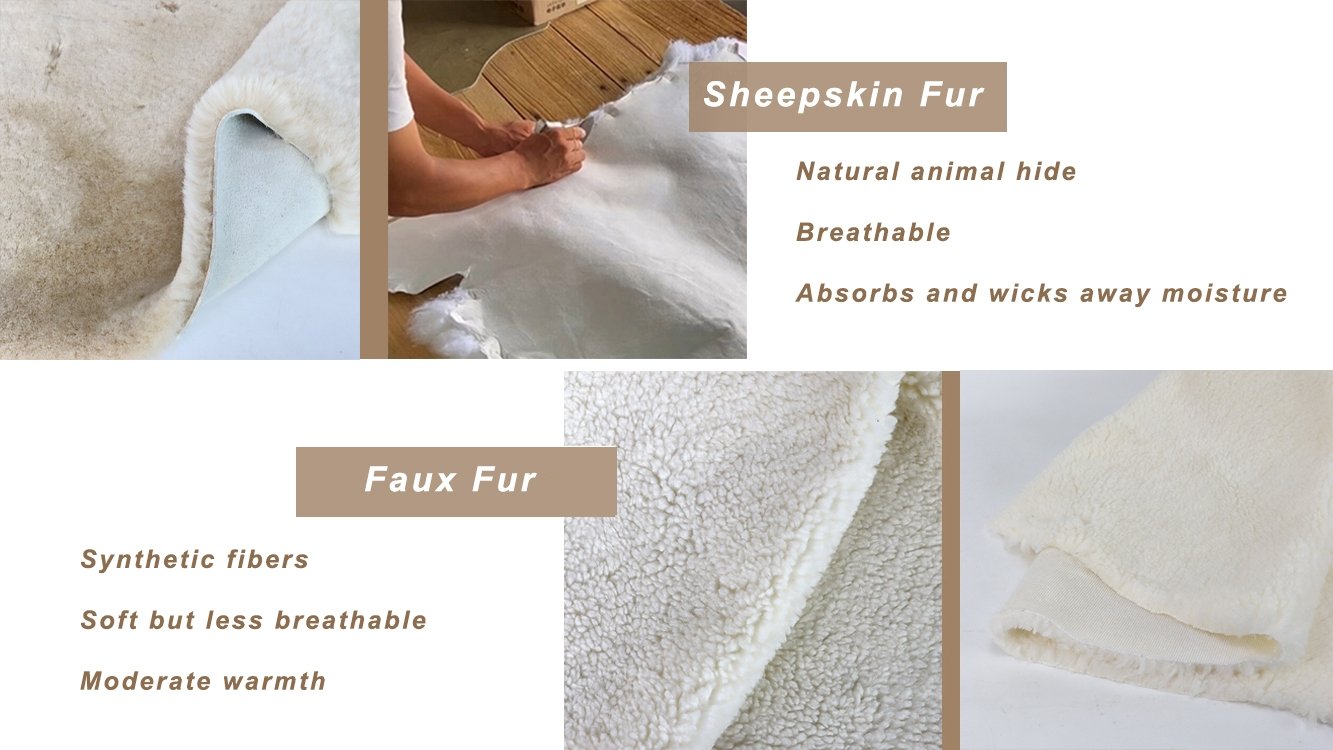
Real sheepskin1 fur is attached to genuine leather backing and feels soft, breathable2, and warm. Fake fur is synthetic fiber3 glued to fabric. Checking the base, burn smell, fiber shape, and touch can quickly reveal the difference.
When I work with new footwear buyers, this question comes up often. Many samples look similar at first glance. I learned that a few simple checks can help buyers avoid costly mistakes.
Why Is It Important to Identify Real Fur in Sheepskin Boots?
Low-quality fake fur can lead to unhappy customers, poor product reviews, and high return rates. Many buyers only notice the problem after bulk production arrives.
Identifying real sheepskin fur ensures better warmth, durability, and product value. Real fur is naturally attached to leather, breathable, and long-lasting, while fake fur is synthetic and often glued to textile backing4.
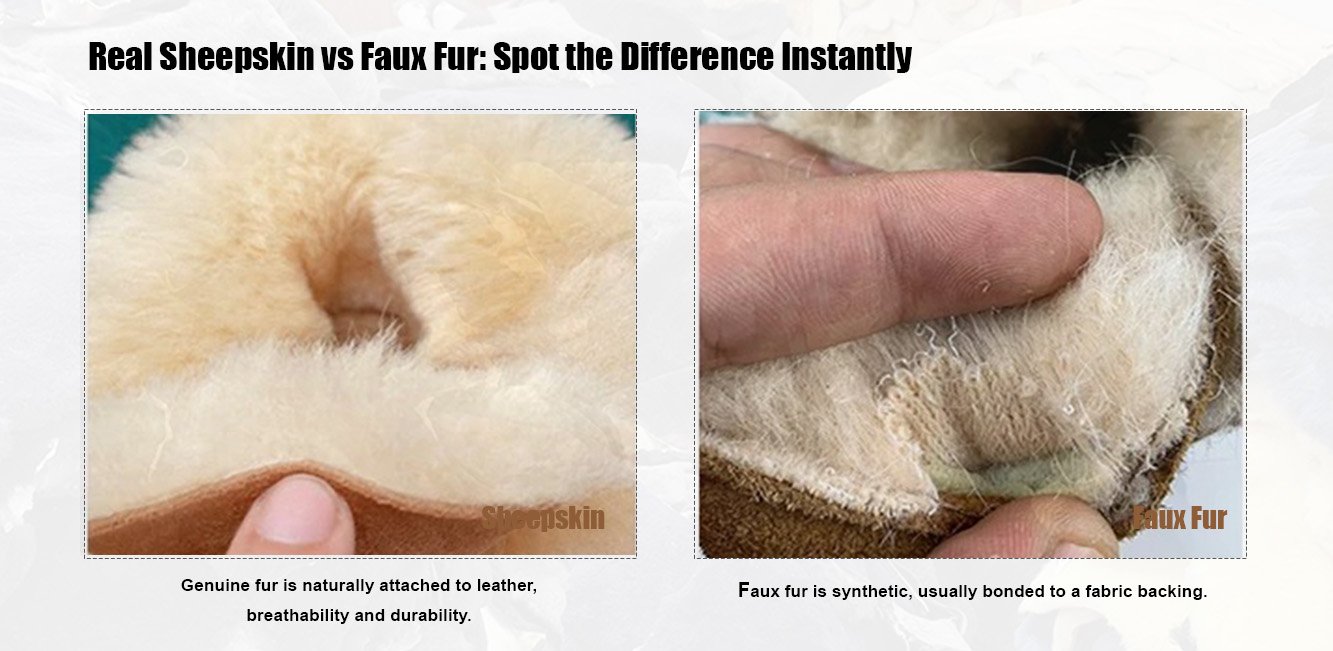
Understanding the Structural Difference
When I first started sourcing wool slippers and sheepskin boots, I noticed that many buyers only focused on the fur appearance. But the key difference is actually in the base structure.
Real sheepskin is a natural two-layer material. The wool grows directly from the sheep leather. This means the fur and leather are one piece. Fake fur products are very different. Manufacturers usually glue synthetic fibers onto knitted fabric.
This structure affects several performance factors.
| Feature | Real Sheepskin Fur | Fake Fur |
|---|---|---|
| Base material | Natural leather | Fabric or knit backing |
| Breathability | Very breathable | Poor airflow |
| Temperature control | Warm in winter, breathable in mild weather | Can feel sweaty |
| Durability | Long-lasting | Fibers shed easily |
| Cost | Higher | Lower |
I once helped a client compare two samples that looked almost identical from the outside. When we separated the fur slightly, we immediately saw the difference. One showed natural leather pores made from suede leather5. The other showed textile threads. That small detail changed the entire sourcing decision.
For brands selling premium winter boots, this difference matters a lot. Customers buying sheepskin expect comfort and durability. Using fake fur may reduce cost, but it often damages brand reputation.
What Simple Tests Can Quickly Identify Real Fur?
Many buyers think fur testing requires lab equipment. In reality, a few simple checks can reveal the truth in seconds.
The most reliable quick tests include checking the backing material, performing a small burn test6, examining fiber tips, and feeling the softness and density of the fur.
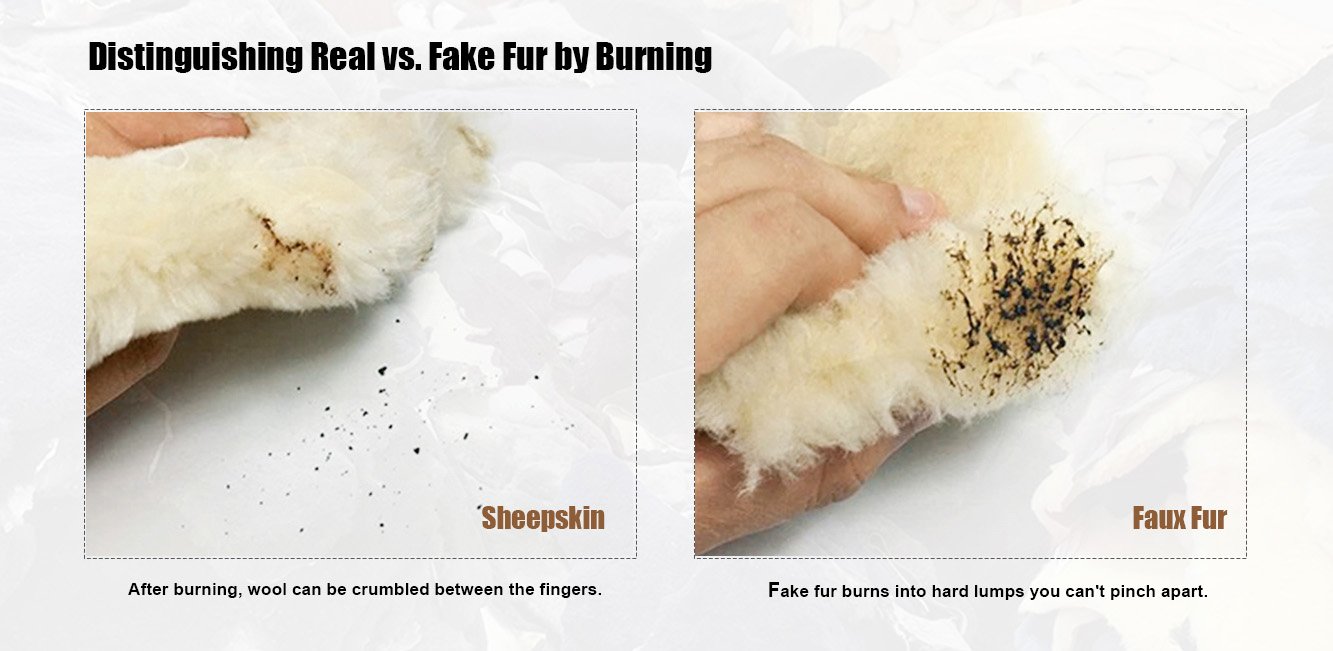
Practical Tests I Often Use When Checking Samples
Over the years working with custom slipper and sheepskin boot production, I developed a few simple inspection habits. These tests are quick and do not require special tools.
1. Check the Fur Base
Separate the fur with your fingers and look at the base.
- Real fur shows natural leather or suede backing
- Fake fur shows fabric or mesh backing
This is usually the fastest way to identify the material.
2. Burn Test
Cut a few loose fibers and burn them carefully.
| Result | Real Fur | Fake Fur |
|---|---|---|
| Smell | Burnt hair smell | Plastic smell |
| Ash | Soft powder | Hard plastic ball |
| Flame behavior | Burns quickly | Melts and curls |
Real fur behaves like human hair when burned.
3. Fiber Tip Observation
Look closely at the fiber tips.
- Real fur has tapered and uneven tips
- Fake fur often has blunt or uniform cut tips
Synthetic fibers are produced in machines, so they tend to look very uniform.
4. Touch and Temperature Feel
Real sheepskin fur feels:
- Softer
- Warmer quickly
- More breathable
Fake fur sometimes feels silky but slightly plastic.
I remember a client from Australia who initially chose a cheaper sample because the fur looked thick and fluffy. When we tested it, the burn test showed melted plastic smell. After switching to real sheepskin, their winter boot line received much better customer feedback.
These simple tests can save buyers from serious quality issues later.
How Do Suppliers Sometimes Mix Real and Fake Fur?
Some factories combine real and fake materials to reduce costs. Buyers who do not inspect carefully may not notice this during sampling.
Mixed-material boots may use real sheepskin lining but synthetic fur trims, or fake fur interiors with real leather uppers. Understanding these combinations helps buyers avoid misleading products.
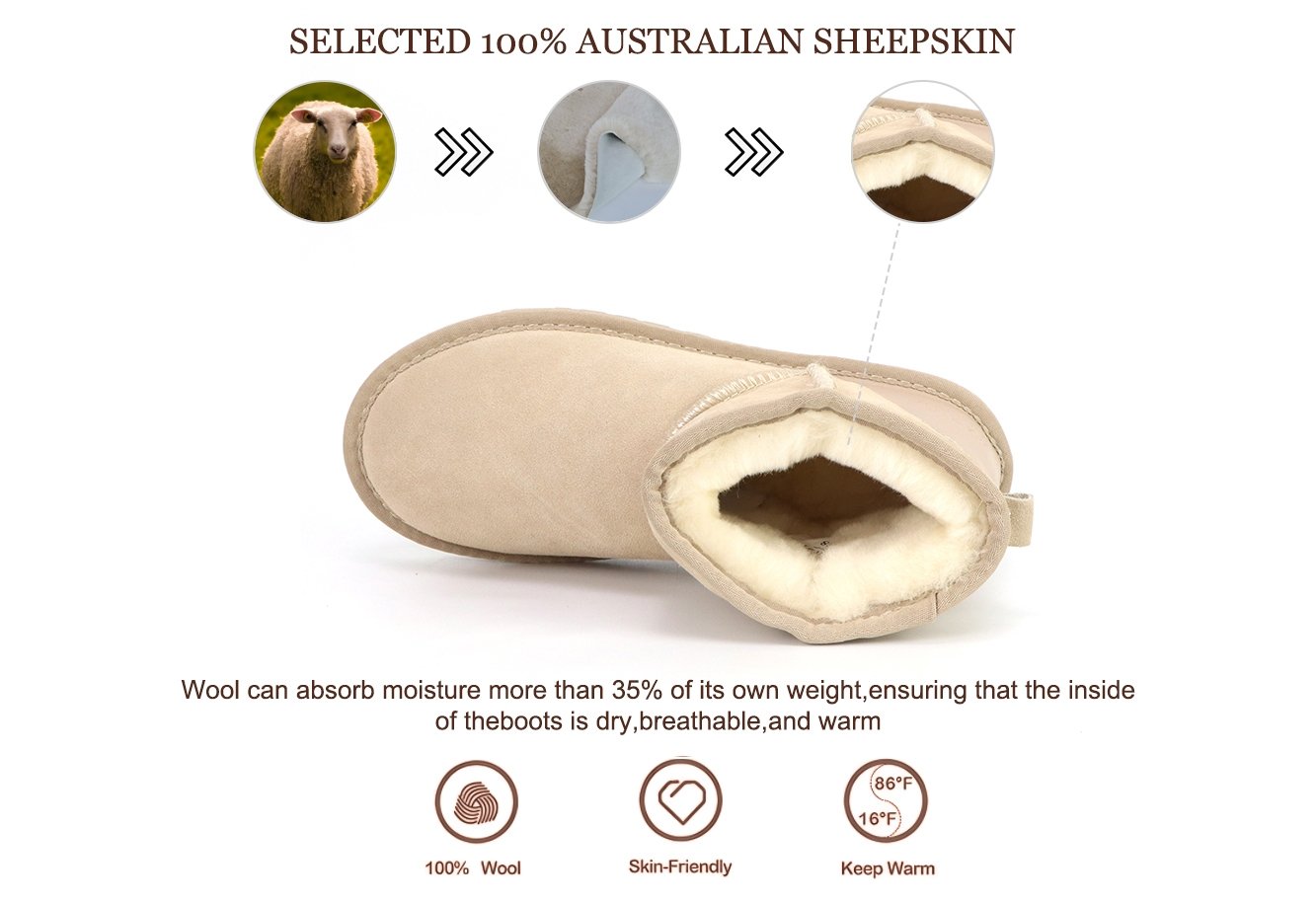
Common Mixed Material Strategies
In the footwear industry, cost control is always important. Some suppliers try to balance price and appearance by mixing materials.
Here are several combinations I often see.
| Boot Part | Possible Material |
|---|---|
| Upper trim | Fake fur |
| Inner lining | Real sheepskin |
| Insole | Wool blend7 |
| Outer collar | Synthetic fur |
From the outside, these boots still look like full sheepskin products.
Another common situation is wool blend lining. Some factories mix wool with polyester fibers8. This reduces cost but changes the performance.
When I review supplier samples for clients, I always check three key areas:
- Inner lining material
- Collar fur material
- Insole composition
If these three areas are real sheepskin, the product usually delivers the warmth and comfort customers expect.
Transparency is important in B2B cooperation. Many good suppliers will clearly label materials if buyers ask the right questions.
For brands selling in markets like the USA, Australia, and Europe, accurate material description is also important for compliance and marketing claims.
Conclusion
Real sheepskin fur connects to leather backing, burns like hair, and feels breathable and warm. Simple checks like base inspection, burn testing, and fiber observation help buyers avoid fake fur mistakes.
Footnotes
This resource explains what sheepskin is, how wool grows naturally from sheep leather, and why it is widely used in winter footwear. ↩
This resource explains the breathability properties of natural wool and why it helps regulate temperature in footwear. ↩
This resource explains how synthetic fibers are produced and why they are commonly used in artificial fur products. ↩
This resource explains how fake fur is constructed using knitted or woven textile backing with glued synthetic fibers. ↩
This resource explains what suede leather is and how it forms the backing layer of genuine sheepskin materials. ↩
This resource shows how the burn test works and why real animal fibers smell like burnt hair while synthetic fibers melt like plastic. ↩
This resource explains what wool blends are and how mixing wool with other fibers affects warmth and cost. ↩
This resource explains how polyester fibers are produced and why they are often mixed with wool to reduce material cost. ↩