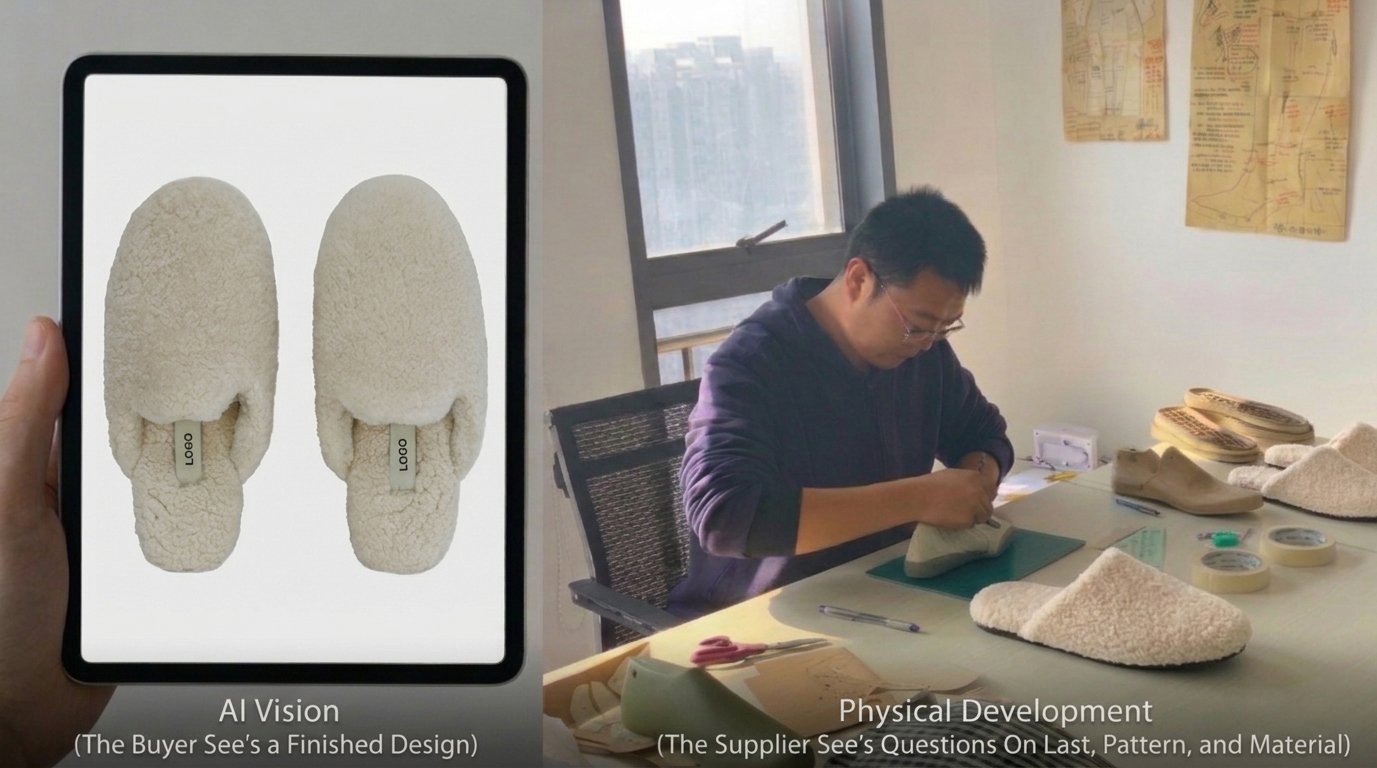
An AI image can show your shoe supplier the look you want, but it cannot define how the shoe should be built or how it should stay on the foot.
This is why a buyer and supplier can study the same clear-looking image and still understand two different products. The buyer sees a finished design. The supplier sees unanswered questions about the footwear last,pattern making, material, proportions and wearability.
At JNP, we support brands that are developing footwear for the first time. AI can make the first design conversation easier, but the image needs to become a shared product brief before anyone treats it as a production instruction.
The Buyer and Supplier Do Not See the Same Information in an AI Image
The buyer sees the intended result, while the supplier sees the product decisions that the image has skipped.
In recent enquiries, we have seen first-time footwear buyers arrive with polished AI images that seem more complete than a simple sketch. The visual is clearer, but the product questions behind it are often still open.
An AI image is usually created from a visual point of view. It can combine an attractive toe shape, a short vamp, a thick lining and a wide opening into one polished picture. It does not need to explain whether those elements can work together on a real foot.
The image may also hide important information. A material can look soft without showing its thickness. A side wall can look clean without showing how it connects to the sole. A vamp can create the right proportion in the picture without providing enough coverage to hold the foot.
This is where communication begins to break down. When the buyer says, “Please make it like the picture,” the supplier still needs to know which parts express the brand idea and which parts can change so the shoe can function.
A Real Sample Problem: A Wide Side and a Short Vamp
A shoe can follow the supplied measurements and still fail as something a person can wear.
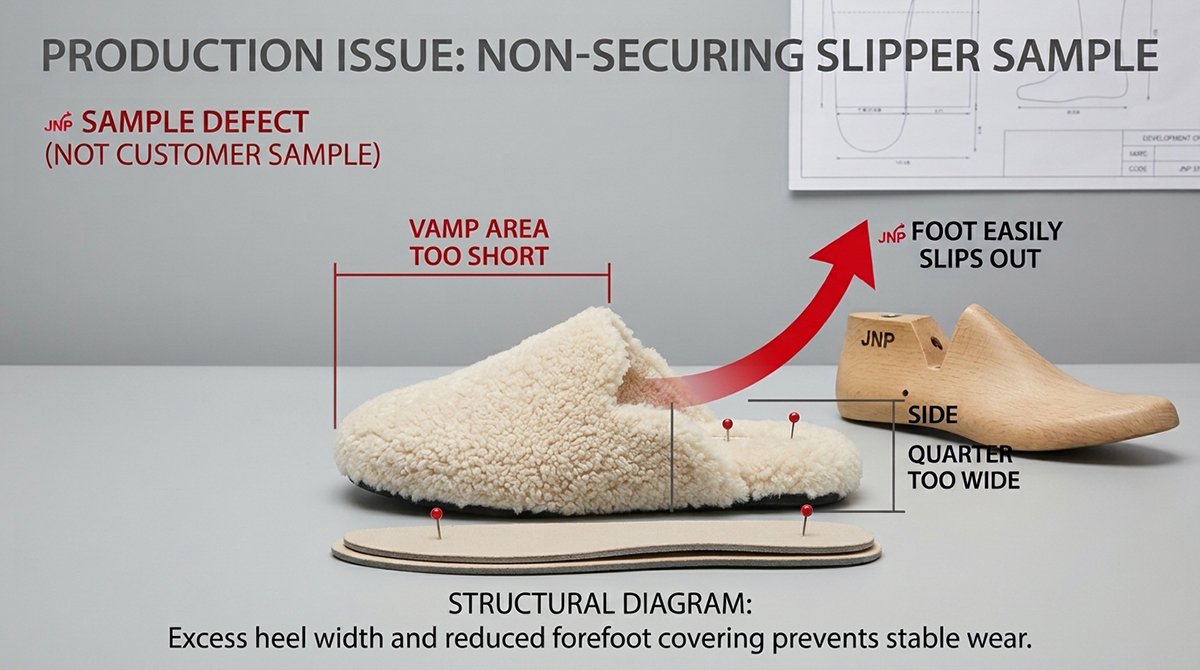
In a recent development, a first-time footwear client gave us measurements for a slipper. The first sample was not simply one size too large. Its sides were too wide, while the vamp—the part covering the front of the foot—was too short.
Together, these two proportions meant the upper could not hold the foot. When someone tried to walk in the slipper, the foot came out of the shoe.
The lesson was not that the client should have known how to make a footwear pattern. It was that isolated measurements did not describe how the slipper needed to work on the foot. The visual proportion, internal space and holding position had to be judged together.
For readers learning about footwear fit and wearability, this example illustrates why a shoe needs to be assessed on the foot rather than judged solely from its appearance.
Why Measurements Alone Cannot Replace the Last and Pattern
A wearable shoe is developed around the relationship between the design, last, pattern and material—not from an image or measurement list alone.
In a normal development, we first read the design and style direction, then consider a suitable material. We select a footwear last, build the pattern on that three-dimensional form, remove the pattern pieces and use them to cut the material before making the shoe.
Each step changes the next one. A thicker material may reduce internal space. A different last changes the shape the pattern must follow. The length and angle of the vamp affect both the look and how the slipper holds the foot.
The pattern also has to control how tension moves through the upper. An experienced pattern maker does not solve this by copying the outline of an AI image once. The pattern is tested through samples, fitting and adjustment until the visual direction and the wearing function can work together.
Material appearance alone cannot establish material performance. Where relevant, footwear materials testing can help buyers understand how physical properties are assessed against appropriate test methods and product requirements.
This is also why a footwear tech pack can be developed with the supplier rather than treated as a document that a first-time buyer must complete alone. The image starts the discussion; it does not finish the engineering.
A well-organized footwear tech pack can help document the agreed design, materials, components and specifications so that the buyer and supplier share a clearer reference during development.
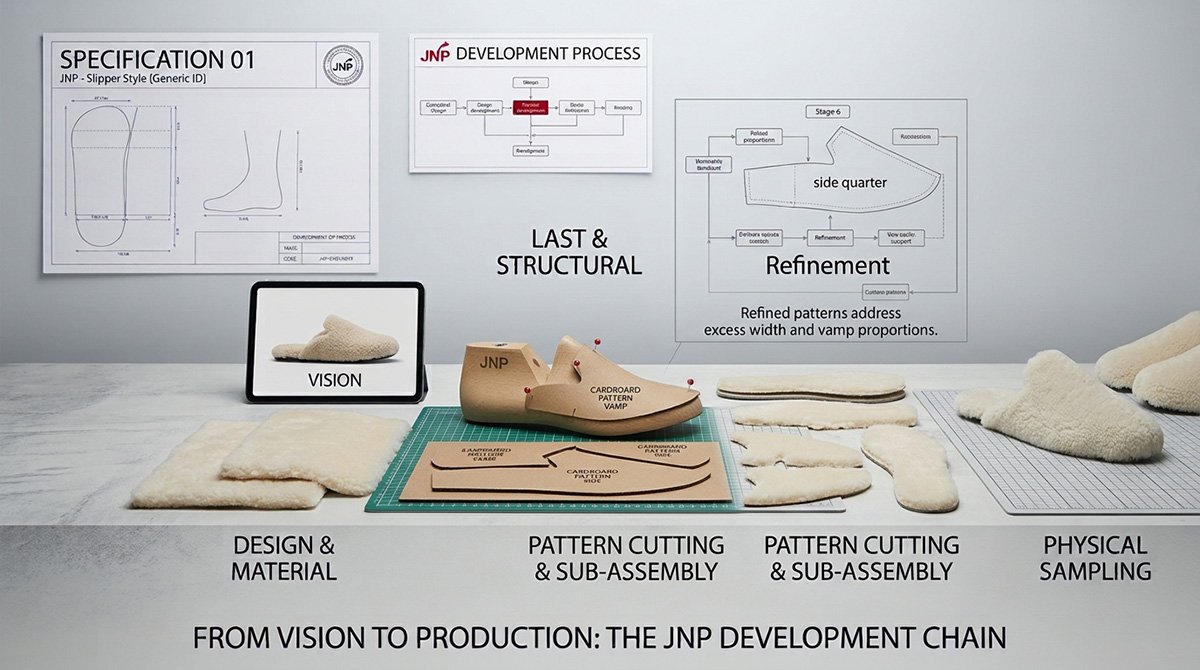
Turn the AI Image Into Shared Decisions Before Sampling
The best use of an AI shoe image is as a visual brief that the buyer and supplier interpret together before sampling.
Step 1: Agree on What the Image Must Preserve
At JNP, the first useful question is not whether we can copy every part of the picture. It is which visual features the buyer does not want to lose when the image is translated into a wearable shoe.
The buyer should explain what matters most in the picture. It may be the overall silhouette, the short-looking vamp, the material contrast, the color or one signature detail. These priorities help the supplier protect the design idea when another part needs to change for wearability.
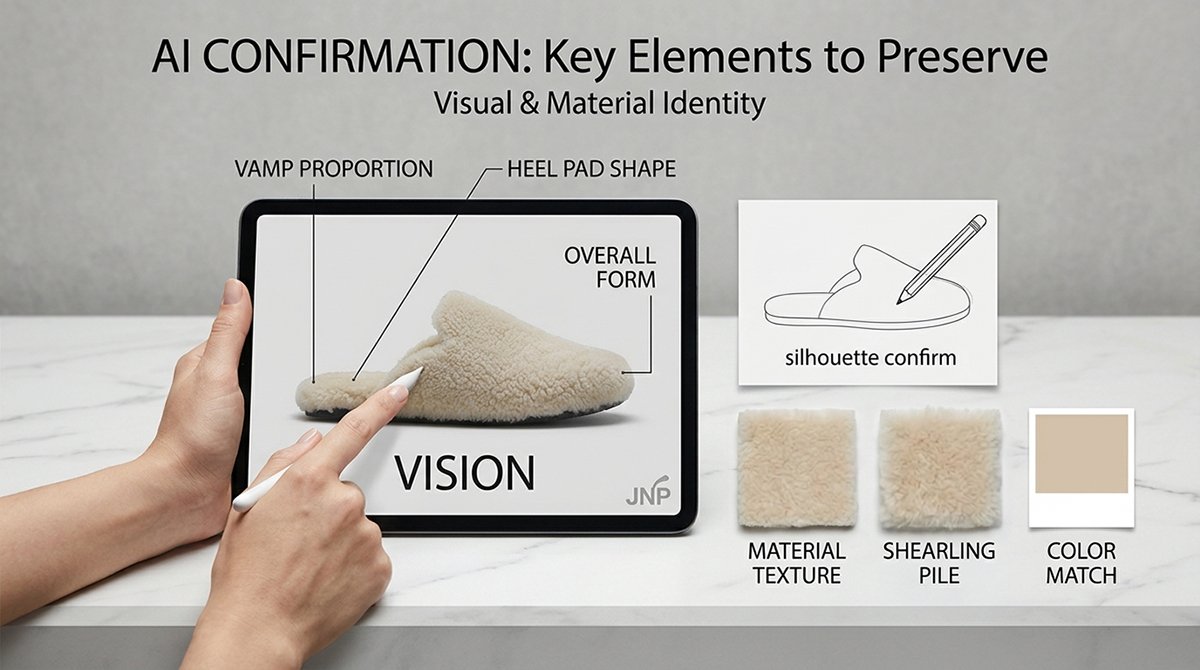
Step 2: Define What the Image Leaves Open
The supplier should then identify the areas that the picture has not defined. Instead of saying only “we can make it” or “we cannot make it,” the supplier should explain where the image needs a last, pattern, material or fit decision.
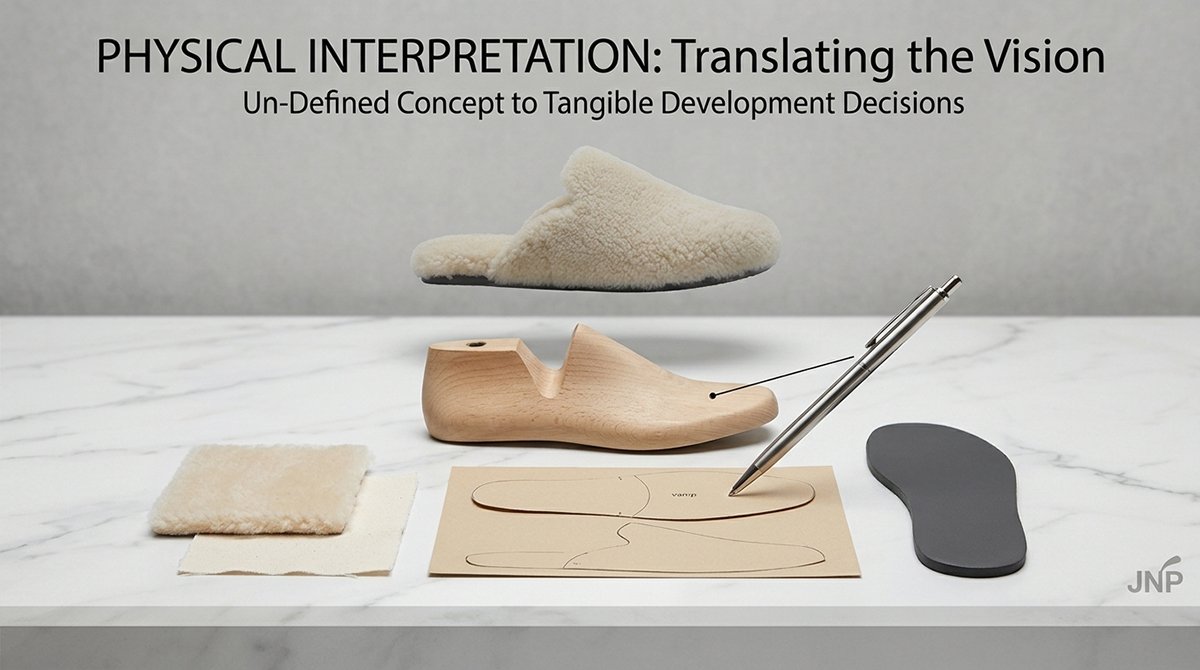
Step 3: Let the First Sample Test Wearability
The first sample should not be judged only by how closely it copies the rendering. It should answer whether the shoe holds the foot, whether the proportions still express the intended style and which points need another adjustment.
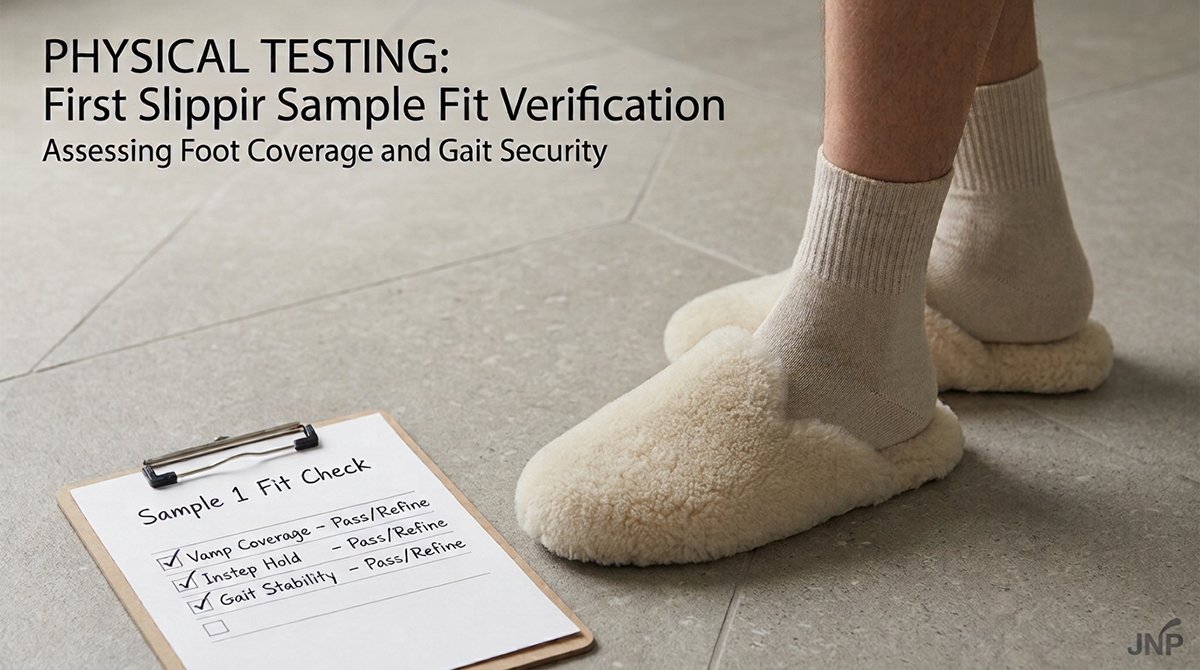
AI has made it easier to show an idea. It has not removed the need to develop the product. When both sides treat the image as the beginning of a shared definition—not the end of one—the conversation becomes clearer and the first sample has a more useful job to do.