Some slipper designs look more expensive because their material, shape and finish all point in the same direction. No single element appears accidental or unresolved.
At JNP, in 16 years of footwear sourcing and production, we have watched brands change materials, revise proportions, remove details and adjust fit—sometimes over several selling seasons.
What Are We Really Seeing When a Slipper Looks Expensive?
We are usually seeing controlled completion: the material, silhouette, proportion and visible finish support the same product idea. Better materials can make a real difference, but material price alone does not resolve an unfinished shape or an unsuitable fit.
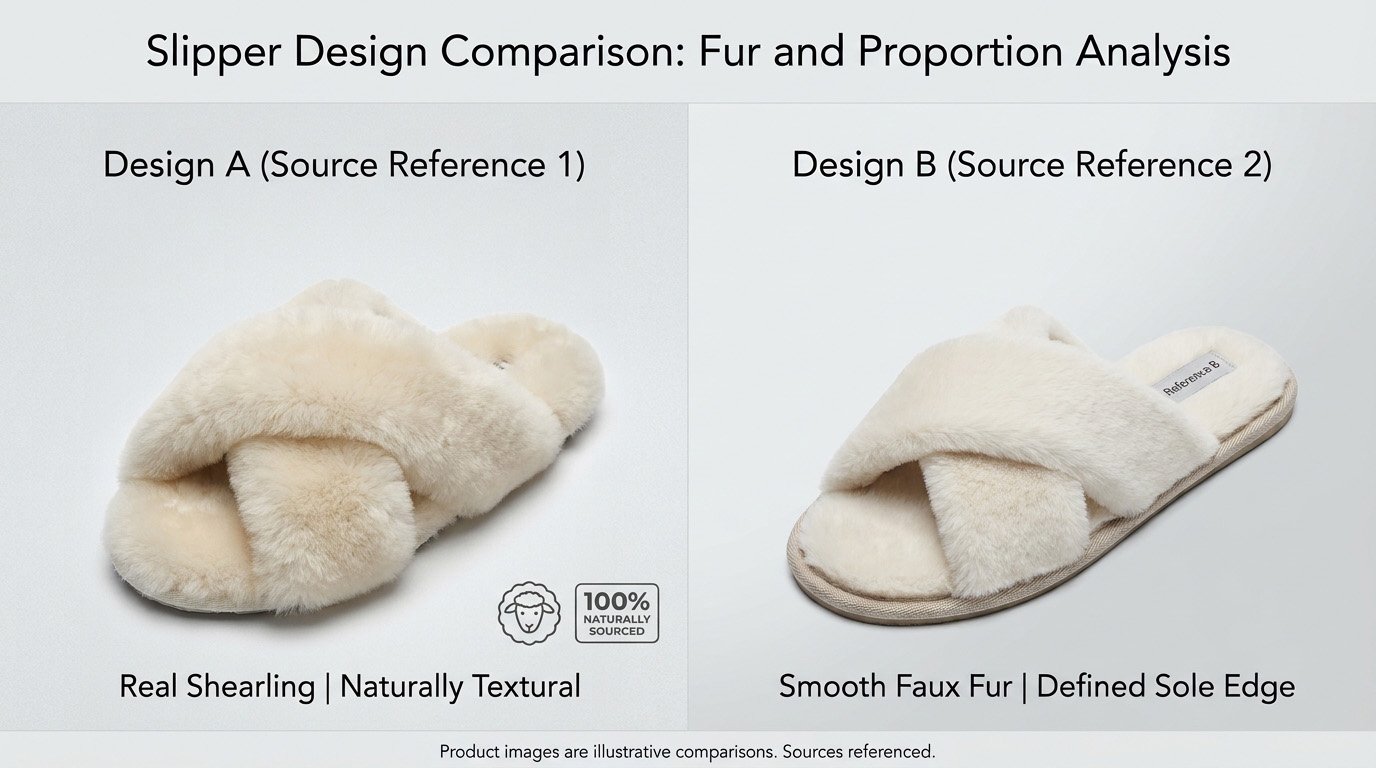
Material changes how an upper catches light, holds its surface and keeps its profile. This is why velvet, suede, shearling and leather can create very different impressions even when two slippers share a similar outline. Understanding suede and shearling material properties helps brands assess these differences more deliberately.
Current premium products make these relationships visible. Frette describes structured elegance, natural textiles and the need to preserve the toe-box profile. A Calvin Klein Collection mule combines goat suede with a high vamp, slightly square toe and minimal silhouette. Dolce & Gabbana's velvet slipper brings velvet, grosgrain piping, a quilted insert and a leather sole into one consistent formal language.
Design research offers a useful—but limited—explanation. A study published online in 2026 found that visually simpler AI-generated designs could increase perceived luxuriousness through a sense of restraint. Another 2026 study warned that minimalist luxury can also be ambiguous when people lack enough brand or design context. These were not slipper studies, so they do not give footwear brands a formula. They support a narrower observation: restraint can signal value, but simplicity needs other quality cues around it. Further research on perceived luxury and minimalist design can help readers distinguish a useful design principle from a universal rule.
Four Directions for Premium Slipper Design
Use the following public product pages as visual references for a four-panel image. Keep the background light, standardize product scale, and add a short design-direction label below each image:
- Feminine soft volume: Prada Shearling Ballerinas — a complete shearling surface, a slender silhouette, and leather straps with metal buckles.
- Playful refinement: Miu Miu shearling-lined suede ballet flats — suede, a furry lining, a rounded toe, a delicate buckle and a bow.
- Quiet minimal: Calvin Klein Collection Hugh Slipper — a high vamp, slightly square toe and clean suede mule silhouette.
- Formal detail: Dolce & Gabbana Velvet Slippers — velvet, grosgrain piping, a quilted insert and a leather sole.
The purpose is not to encourage copying. It is to help brands identify a premium design direction that suits their own identity. Confirm image-reproduction permissions and credit the relevant brands and sources. If permissions cannot be confirmed, use the links as references and commission an original composition using authorized materials.
Alt Text: Four premium slipper directions shown through shearling ballerinas, bow-detailed suede flats, a minimalist mule and a formal velvet slipper.
Why Does the Right Improvement Look Different for Every Slipper?
A slipper looks more resolved when the change answers its actual customer and product problem—not when every brand makes the same change. In our work, three products required three different kinds of refinement.
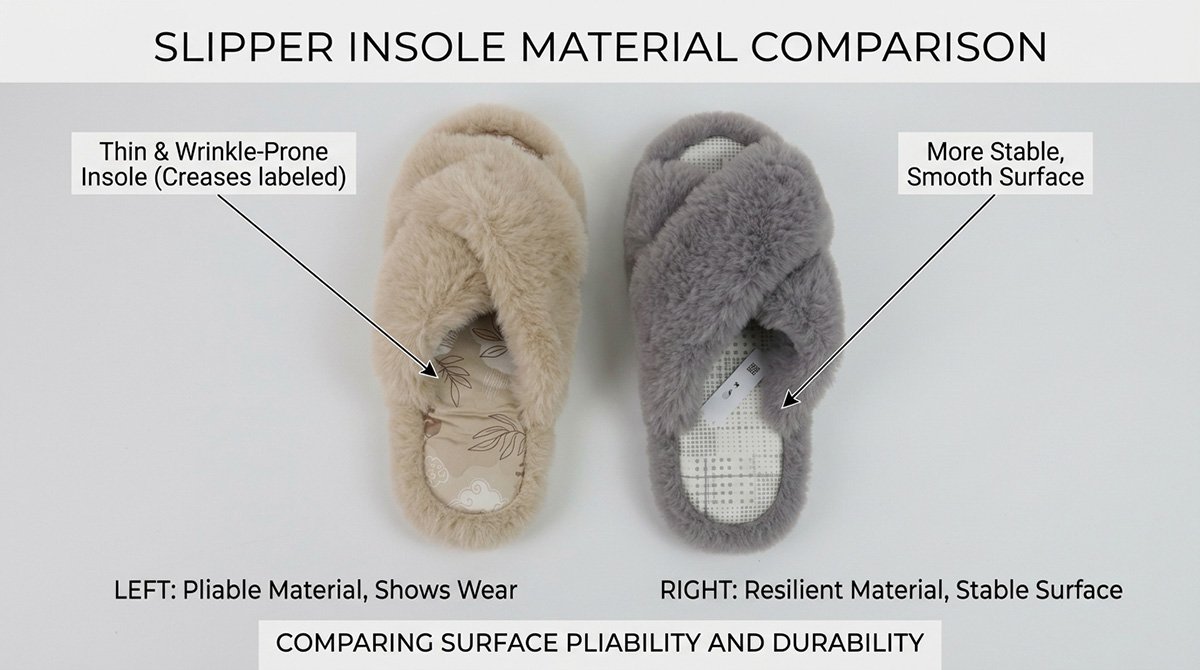
For one sleepwear customer, the original printed fabric was too thin for the intended slipper. It could preserve the correct pattern but wrinkle on the upper and weaken the finished shape. Moving the recognizable print onto a more suitable footwear material improved the result; this was a material decision, not an argument that materials do not matter.
For production teams evaluating alternatives, footwear material testing standards can provide a useful starting point for checking whether a material meets the product's intended performance requirements. Appearance alone cannot establish abrasion resistance, colorfastness or flexibility.
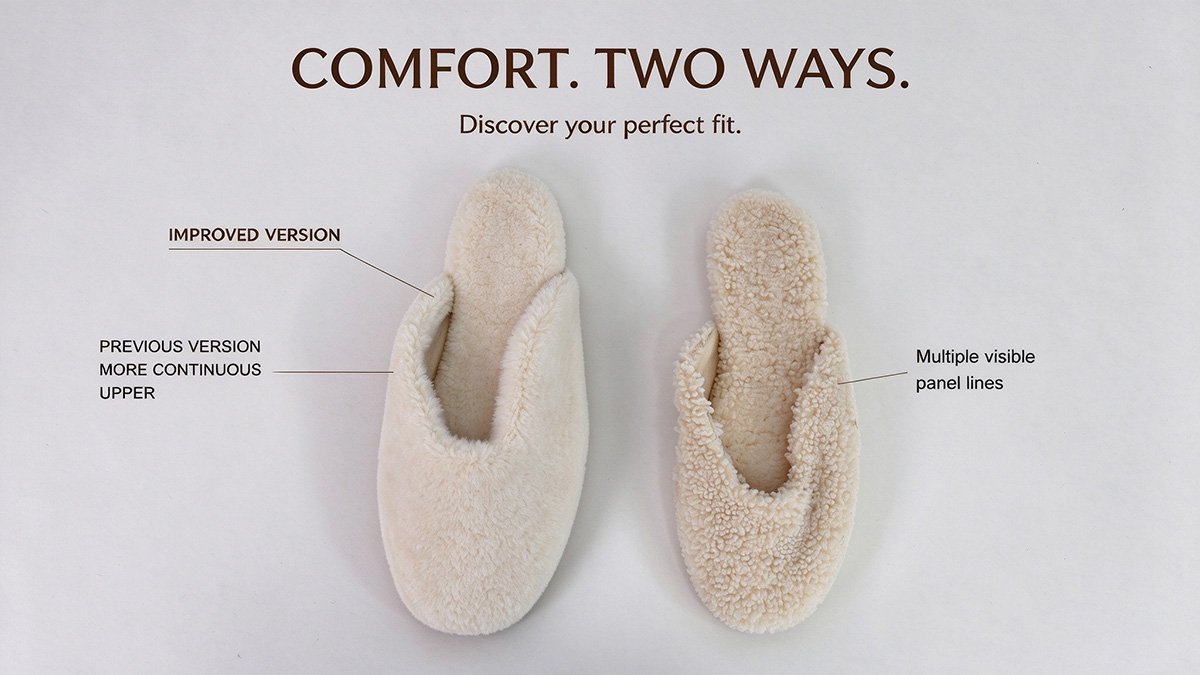
In a separate furry-slipper project, the product became visually quieter over time. The brand and JNP reduced visible lines and seam positions, retained colours that had already worked for the brand, and continued to improve comfort. Fewer lines helped this particular design, but "remove more details" is not a general rule.
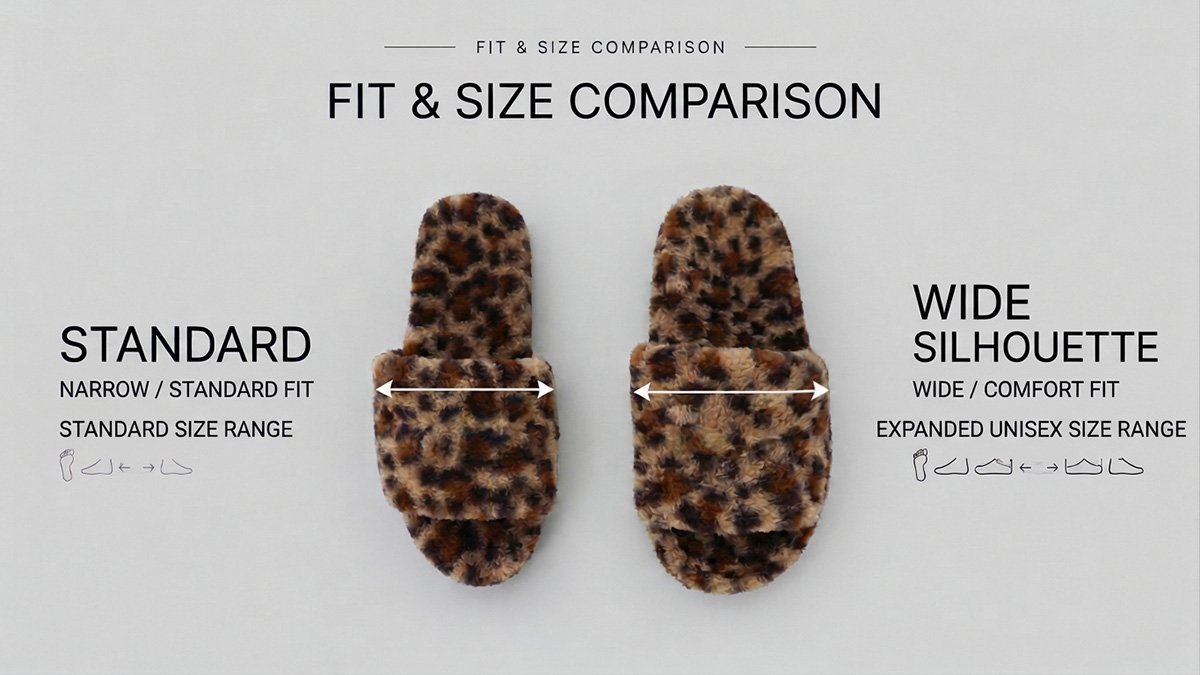
Another product was intended mainly for European and American men and a unisex market. Its next step was not visual reduction. The shape became wider and more comfortable, while the size offer expanded. The product felt more complete because its proportions and fit were becoming more appropriate for the people expected to wear it.
Reviewing footwear fit and sizing principles can help brands evaluate whether a change in width, toe-box shape or size coverage is appropriate for their intended customer rather than assuming one silhouette fits every market.
These cases are why a brand may need to examine what should shape its first slipper before deciding that the answer is a more expensive upper, fewer seams or a new decoration.
Three Different Refinement Paths
Use original, logo-free illustrations rather than customer product images.
- Left: A thin, wrinkle-prone upper material compared with a more stable surface.
- Center: A design with multiple visible panel lines compared with a more continuous upper.
- Right: A standard narrow fit compared with a wider silhouette and broader size coverage for a Western men's or unisex market.
Can the Best Version Be Designed Before the Market Responds?
A first version can establish a direction, but a long-running product may become more distinctive only after the brand and supplier learn from real market response together. That is what happened in one JNP furry-slipper project that began in 2019.
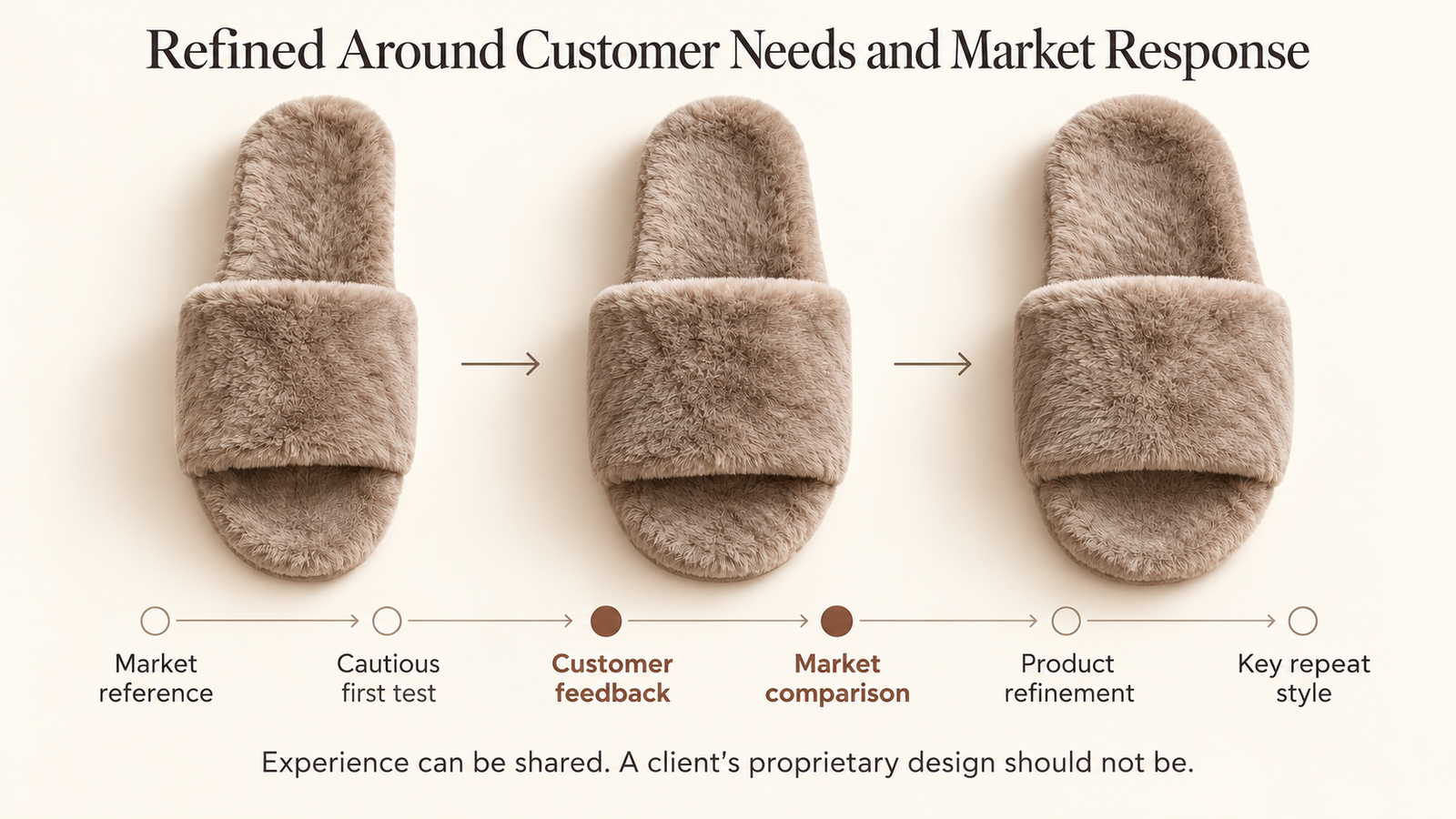
The client started from a market-proven style. At that stage, no one knew whether the product would become a major seller, so the first development investment was relatively cautious. This was not a failure of ambition; it reflected the amount of information available at the time.
As the brand collected customer feedback and compared similar products in the market, the next questions became clearer. Colours were narrowed to those that worked for the brand. Comfort improved. Visible lines and seam positions were reduced. The slipper gradually moved away from being only a market reference and became one of the brand's key repeat styles in recent years.
This is consistent with the general logic of consumer feedback in product development: successive versions can incorporate what a brand learns from customers and market observations. However, the direction of improvement still depends on the product, the customer and the evidence collected.
We cannot claim that every product needs years of revision, or that market feedback always points toward a simpler design. What this project showed us was that premium character can emerge through editing and learning—not only through a larger first budget.
There is also a boundary to how we tell this story. JNP works under confidentiality commitments, and a version developed and tested for one client should not become a sales reference for another. We can share the development lesson, but we will not publish the client's proprietary images or turn its hard-won product into a template.
After 16 years in footwear sourcing and production, we do not believe one supplier can define a universal premium slipper. We can bring production experience, public market evidence and questions formed through real projects; the brand brings its customer knowledge, and the market adds information neither side had at the beginning.
For brands planning a new collection, understanding the footwear product development process can help connect material selection, sampling, fit reviews and production decisions into a more organized workflow.
The more useful conversation is therefore not simply, "How can we make this slipper look more expensive?" It is, "What still feels unresolved for the customer this slipper is meant to serve—and what should the next version help us learn?"