Changing the fur fabric can change two things in a slipper you already know: its finished appearance and its fit. At JNP, we have seen this when brands consider replacing wool with faux fur to control costs, and in feedback about adapting leather patterns for fur-lined products. Keeping the same base design does not mean the original sample approval covers the new material version.
Why can the same design look different in another fur fabric?
The material helps create the shape you see, not just the surface you touch.
Some of our customers consider moving from a shorn-wool material to faux fur to meet a different cost target. The idea is understandable: keep the familiar slipper and change the material. But the result is not always a like-for-like replacement.
Understanding the differences in wool and faux fur material properties1 helps explain why changing the fabric can affect the finished product.
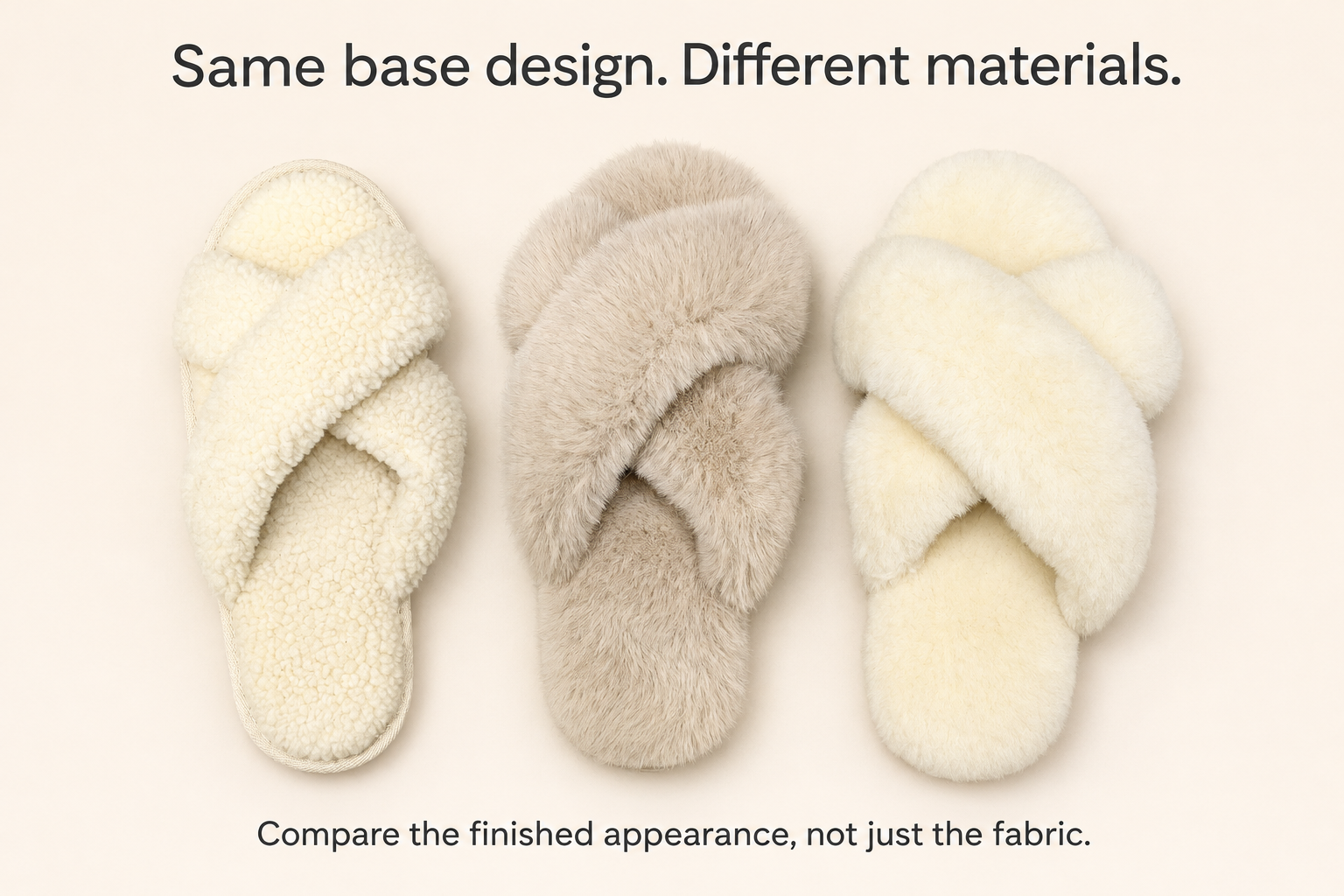
In the material combinations we have worked with, the wool was denser than the proposed faux fur. The difference changed how full the finished slipper looked, even though the base design remained the same. That is an observation about those materials, not a rule that all wool is denser than all faux fur.
Factors such as fabric pile density and thickness2 can influence how full a material looks and feels in the finished product.
To bring the new version closer to the original appearance, we may need to consider changes to the pattern or the lining and padding. The fabric choice and the construction need to be reviewed together. A replacement material does not automatically reproduce the original result.
The three cross-band slippers below show why this matters. They share a base design, but the different textures and fullness give each one a different visual character. None needs to be presented as the universally better option; the question is which result suits the brand.
Can a material change affect how the slipper fits?
Yes. A pattern that worked with one material may not provide the same room when used with a thicker one.
A brand customer previously reported that using an existing leather pattern directly for a fur version made the product feel around half a size to one size smaller. The material thickness was part of the problem: the original pattern had not simply transferred into the same fit.
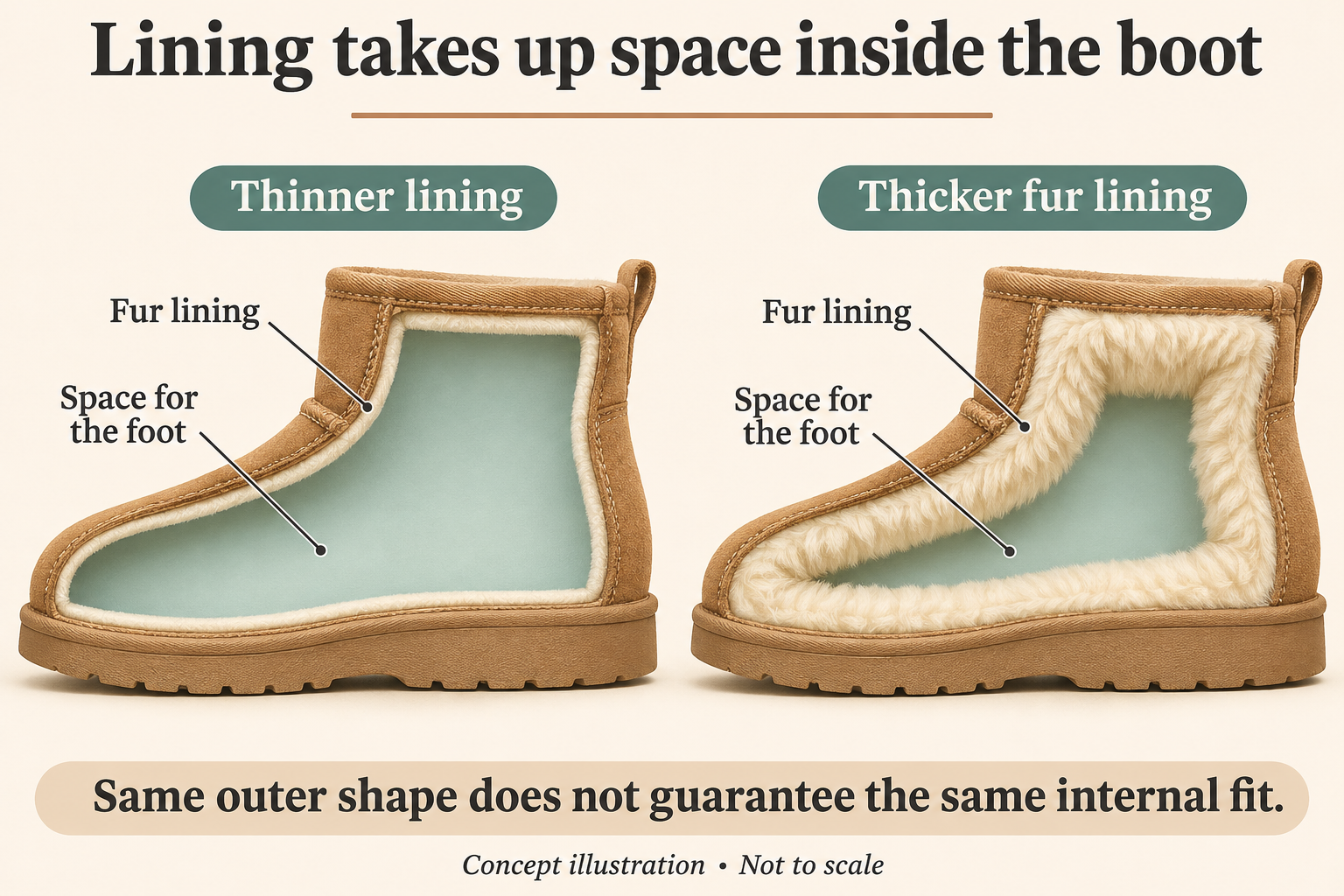
This is closely related to footwear lining construction3. Different lining materials occupy different amounts of internal space, which can affect the room available for the wearer's foot.
That feedback is not a size-conversion rule. It does not mean every fur version should be made one size larger. The actual result needs to be checked on the updated sample rather than corrected by changing the size label alone.
The winter-boot illustration below makes the principle visible. Fur lining occupies part of the interior, leaving less clear space within the same outer shape. It is a concept illustration, not a measured comparison or a picture of the customer's product.
We discuss the broader difference between a size label and a finished fit in why the same slipper can fit differently across factories. Understanding footwear sizing and fit4 also helps explain why the same nominal size does not necessarily provide the same wearing experience after a material change.
What should a brand confirm in the updated sample?
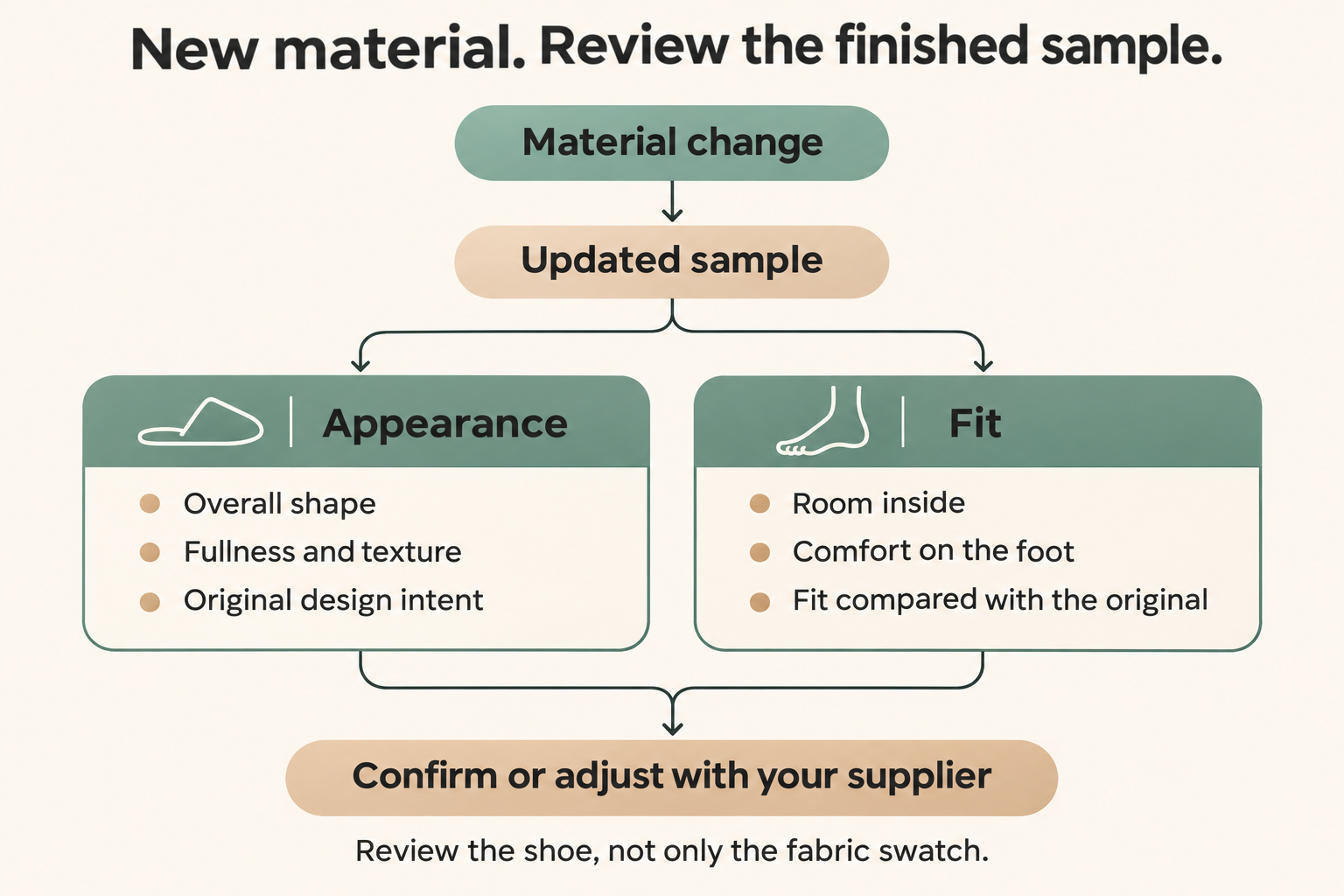
Review the finished shoe against the original design intention and fit—not only against the new fabric swatch.
For the wool-to-faux-fur change, the useful question is whether the new slipper still has the fullness and overall appearance the brand wants. For the leather-to-fur example, the question is whether the intended wearer still has enough room. Both require looking beyond the material in isolation.
Compare the original and updated samples side by side. Check the overall shape and texture, then try the updated version on rather than relying only on photographs. Tell your supplier which differences are acceptable and which would change the product your customer expects.
A structured footwear product development and sample evaluation5 process can help brands identify these differences before approving production.
Changing materials can still be a useful route for a focused, low-MOQ footwear project. The point is not to reject a more economical option, but to confirm the product it actually creates.
If you are considering a material change, share the original sample or design reference with JNP and explain what you want to preserve. We can discuss the new version with those priorities in mind, rather than treating a fabric substitution as an unchanged shoe.
Footnotes
Learn how wool and faux fur differ in fiber structure, density, thickness, and surface texture, and why these properties can influence the appearance of finished slippers. ↩
Understand how pile height and density influence fabric fullness, surface texture, and thickness, helping explain why different fur fabrics can produce different finished appearances. ↩
Explore how lining materials and construction affect the internal space of footwear, helping explain why replacing leather with fur lining may change the available room inside a slipper. ↩
Understand why footwear fit depends on more than the size label, including internal volume, material thickness, and construction details. ↩
Learn about key footwear sample evaluation considerations, including appearance, construction, material consistency, and fit, before approving a revised product. ↩