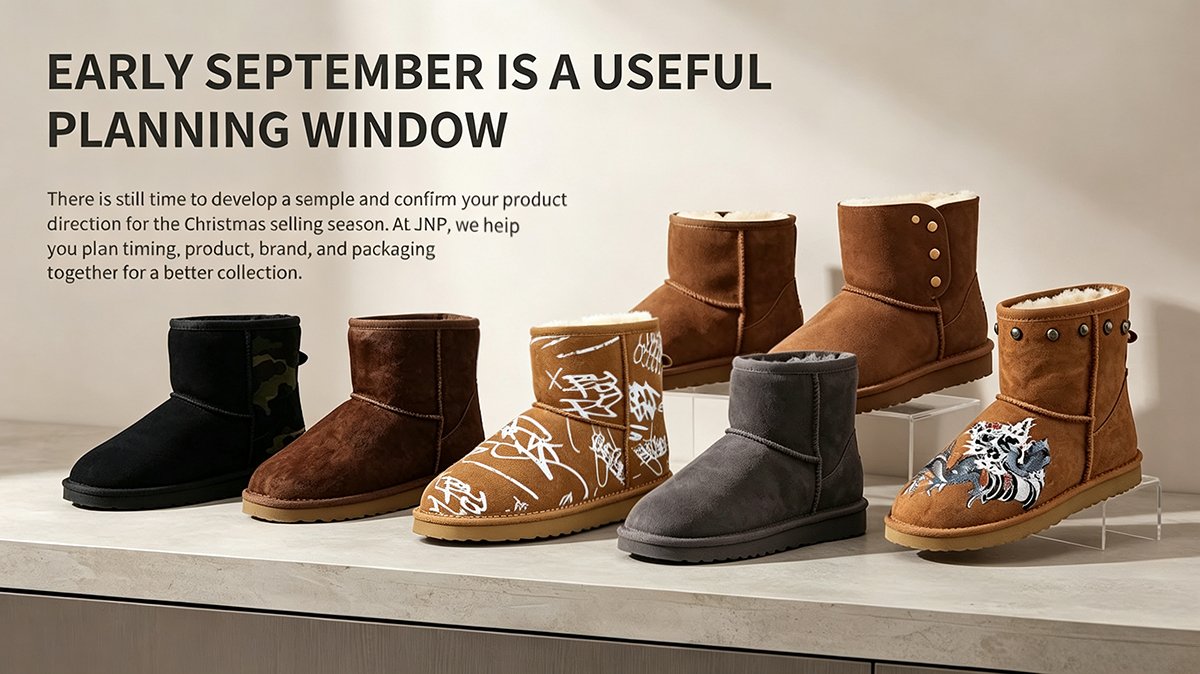
Early September is a useful planning window for a winter boot collection. There is still time to develop a sample, confirm the product direction and move into production for the Christmas selling season, provided the first sample is approved without a long revision cycle.
At JNP, we do not see September only as an order deadline. It is the point when timing, product selection, brand details and packaging can still be planned together. That creates a better collection than simply choosing a boot and asking how quickly it can be made.
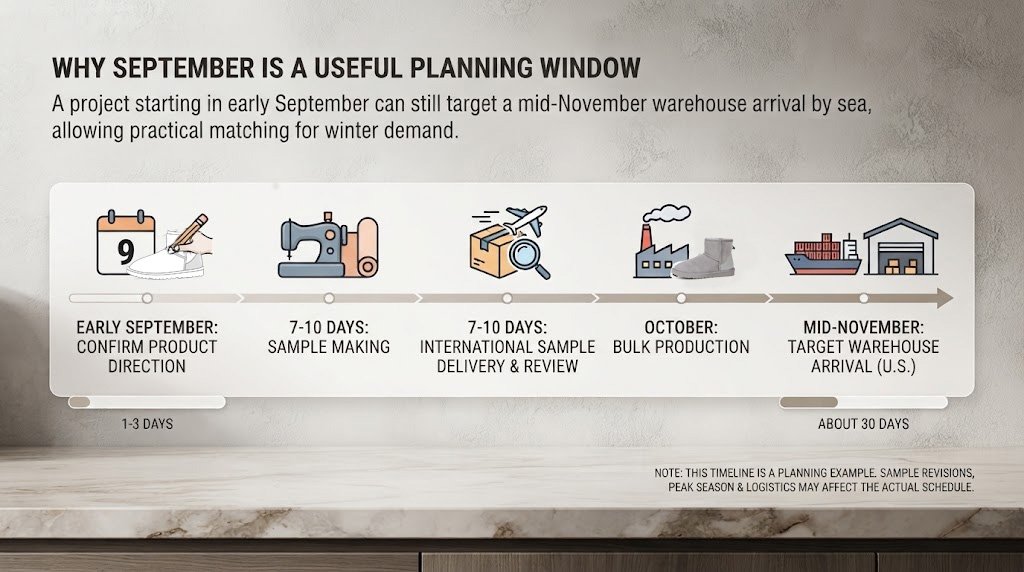
Why September Is a Useful Planning Window
September works because buyers can still build the project backwards from their target warehouse date.
Sample making normally takes 7–10 days, followed by another 7–10 days for international sample delivery. Once the sample is approved, bulk production normally takes 30–45 days, while the current planning case allows about 30 days for sea freight to a U.S. warehouse.
| Project phase | Current planning range | What to prepare |
|---|---|---|
| Sample making | 7–10 days | Reference style, materials, colors and logo direction |
| International sample delivery | 7–10 days | A person responsible for reviewing the sample |
| Sample approval or revision | Variable | Clear comments and a decision deadline |
| Bulk production | 30–45 days | Final specifications, quantity and packaging |
| Sea freight to a U.S. warehouse | About 30 days for the current planning case | Destination and logistics route |
If a project starts in early September and the buyer approves the first sample quickly, a mid-November warehouse arrival by sea may still be possible. A sample revision or a longer peak-season production queue will move that date later, so the schedule must be checked against the actual order.
The right arrival date also depends on the selling channel. Established brands may want stock in their warehouse around mid-October so they can distribute it before a November launch. For a smaller direct-selling brand, receiving winter stock in November can be a practical match for Christmas demand without bringing the inventory in too early.
For context, the National Retail Federation's U.S. winter holiday season1 runs from November 1 through December 31. This does not create one universal footwear deadline, but it helps explain why a November warehouse arrival can still be commercially relevant for a smaller direct-selling buyer.
Planning context: Seasonal demand planning is not only about having enough stock. It also helps buyers avoid bringing in too much inventory before demand is ready. Retail demand planning2 recommends accounting for seasonality, customer demand, inventory and suppliers together. This is why the best planning date should be built around the buyer's actual sales channel rather than a universal deadline.
Choose a Boot Shape With Broad Everyday Appeal
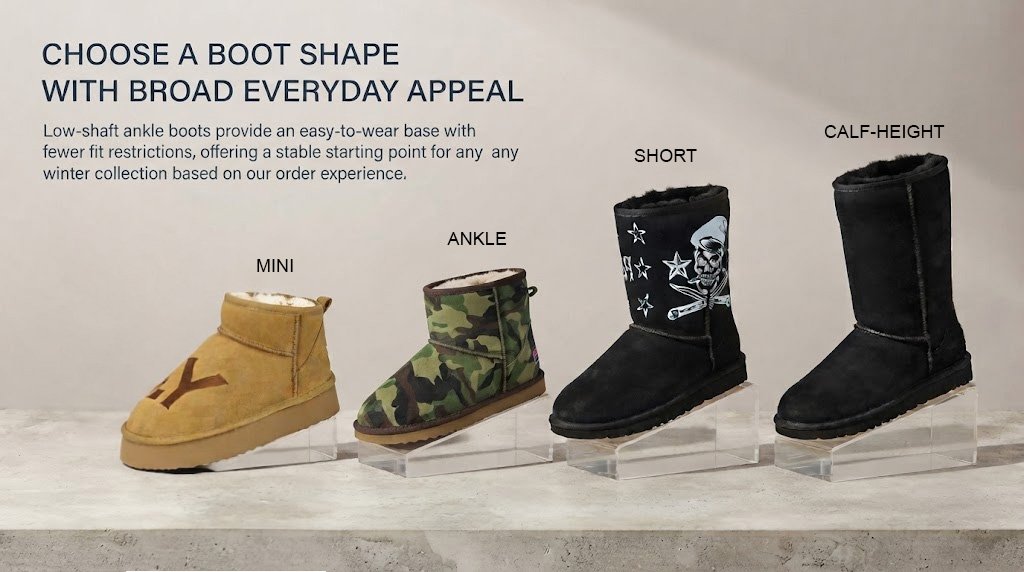
A low-shaft ankle boot gives a winter collection an easy-to-wear base with fewer calf-fit restrictions.
Based on boots sold through JNP's historical orders, approximately 70% were positioned around the ankle. This is JNP's own order experience, not an industry-wide benchmark.
Taller calf-height boots need more attention to calf circumference and fit. An ankle-height, mini-height or short boot is less restricted by this measurement and can fit more naturally into casual, everyday wardrobes.
Basic boot shapes also remain the most consistently ordered direction in JNP's experience. They are comfortable, familiar and suitable for different wearing occasions, which gives a buyer a stable starting point for the collection.
Give a Proven Basic Style a Clear Reason to Be Chosen
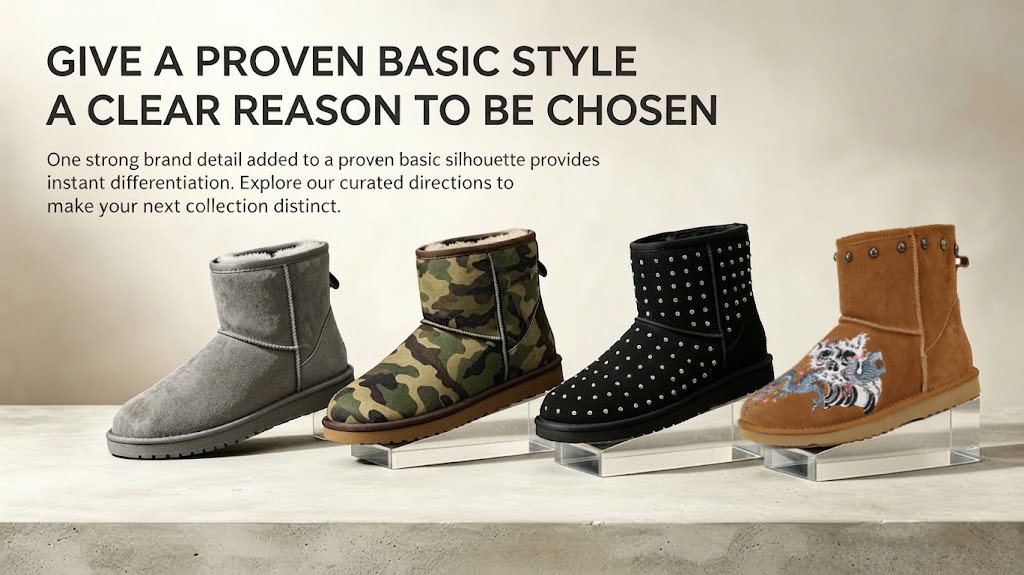
The most useful differentiation often comes from one strong brand detail added to a proven basic silhouette.
Camo prints have been requested repeatedly by JNP buyers over multiple seasons. Other directions can include animal prints, printed hair-on uppers, round studs, brand-specific artwork or embroidery.
These elements can make a familiar ankle boot feel more distinctive without changing the entire construction. The basic shape keeps the product approachable, while the print, texture or decoration gives the customer a reason to notice the brand.
This approach can also support a more premium product position, but the detail needs to match the buyer's target market. A bold print may suit a fashion-led online brand, while restrained embroidery or studs may work better for a collection that needs a quieter identity.
Public retailer listings show how this principle appears in the current market. Dillard's Classic Ultra Mini Plains3 presents a leopard cow-hair upper on a familiar low-shaft form, while Urban Outfitters' Neumel Cow Print listing4 shows a heritage chukka silhouette updated with an earth-tone cow-hair print. These are market references—not designs to copy—but they demonstrate how material and surface treatment can refresh an established shape.
Finish the Collection With Intentional Packaging
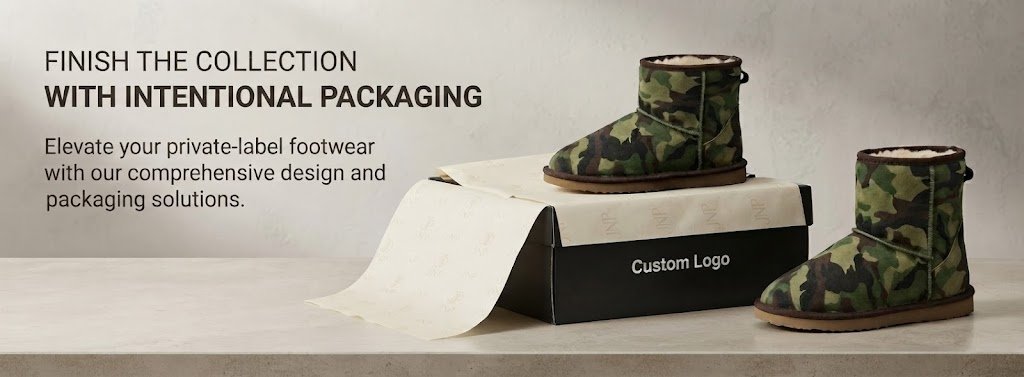
Packaging completes the product story and should be discussed before bulk production begins.
Smaller brands often ask whether they can still use a shoe box carrying their own logo. A private-label footwear packaging option such as a standard black shoe box with a brand logo may provide a classic, clean presentation, subject to the final quantity, box specification and order requirements.
The box does not need to be complicated to feel intentional. Logo placement, box proportions, labels and the way the product is presented inside can make a basic boot collection feel more complete and consistent.
September gives buyers an opportunity to connect all these decisions: the warehouse date, the boot height, one distinctive brand element and the packaging. If you are preparing a winter collection, share your target market, preferred arrival date and style references with JNP. We can help you assess the timeline and turn a reliable basic boot into a product direction that feels specific to your brand.
Footnotes
The National Retail Federation's holiday-season reference provides an authoritative U.S. retail calendar context, defining the winter holiday season as November 1 through December 31. This helps buyers understand why November inventory arrival can still be commercially relevant for Christmas-focused selling. ↩
Shopify's retail demand-planning guidance explains that seasonal planning should consider factors such as seasonality, customer demand, inventory and suppliers together. This helps buyers plan inventory around their actual sales channel instead of relying on a universal deadline. ↩
Dillard's provides a real retail-market example of the UGG Classic Ultra Mini Plains using a leopard cow-hair upper to give a familiar low-shaft boot silhouette a distinctive surface treatment. ↩
Urban Outfitters provides a retail example of the UGG Neumel silhouette updated with an earth-tone cow-print upper, illustrating how a recognizable heritage shape can be differentiated through material and print treatment. ↩