Yes—if the product extends one of three experiences your customers already buy from you: home comfort, gifting or hospitality.
At JNP, we do not see this as a decision to “start selling shoes.” For a bedding, bath, sleepwear or home brand, the better question is whether slippers can carry the same comfort story into a new retail product.
A trend may create the opening. Customer fit decides whether the category belongs in the collection.
The Opportunity Is Bigger Than a Hotel Amenity
Hotel-inspired slippers now appear as sized, designed and packaged retail products—not only as disposable guest-room supplies.
The category already spans several positions. Frette’s Voyage Slipper1 uses a velvet upper, a cotton-modal insole, EU footwear sizing and a flexible rubber sole. Four Seasons at Home2 sells an embroidered velvet slipper with indoor-outdoor use, multiple sizes and bespoke packaging for gifting or storage.
Other brands translate the idea in different ways. Brunch3 says it rebuilt the classic hotel slipper with an outdoor-ready EVA outsole, while Zara Home4 merchandises slippers directly with bathrobes and bathroom textiles. Signoria Firenze5 coordinates its hotel-inspired cotton slippers with towels and bathrobes.
These examples prove that the category can sit inside luxury, home, bath and everyday leisure collections. They do not prove the sales volume of any individual style, because official product pages rarely publish that data.
The Best Fit Is Usually an Existing Customer
A lifestyle brand should add slippers when the product serves the customer it already understands.
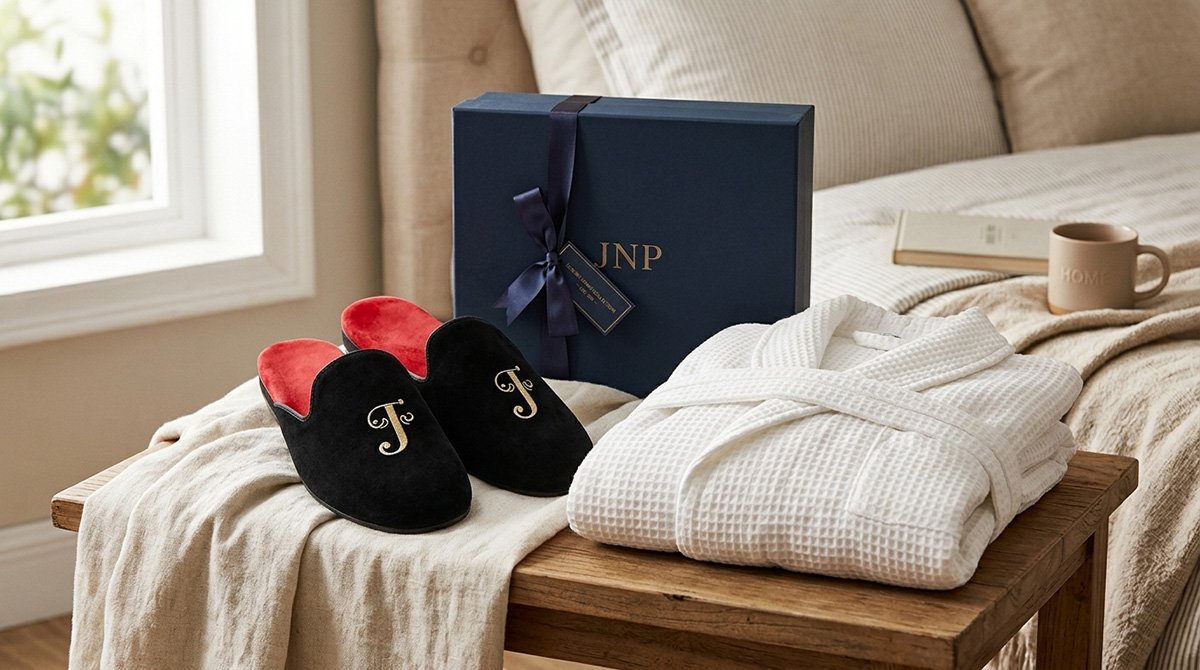
A bedding customer is already buying a sleep ritual. A bath customer is buying comfort before and after bathing. A gifting customer is buying presentation as well as function. In each case, slippers can extend an existing moment rather than force the brand to build a completely new footwear audience.
We saw this with a premium European bedding brand that worked with JNP. The brand entered slippers when the category was gaining attention, but it did not treat the product as a free accessory or a basic hotel amenity. It developed a market-facing retail slipper with a home-lifestyle look and more premium packaging.
That distinction matters. The trend prompted the project, but the brand made the product credible by connecting it to the world its customers already knew.
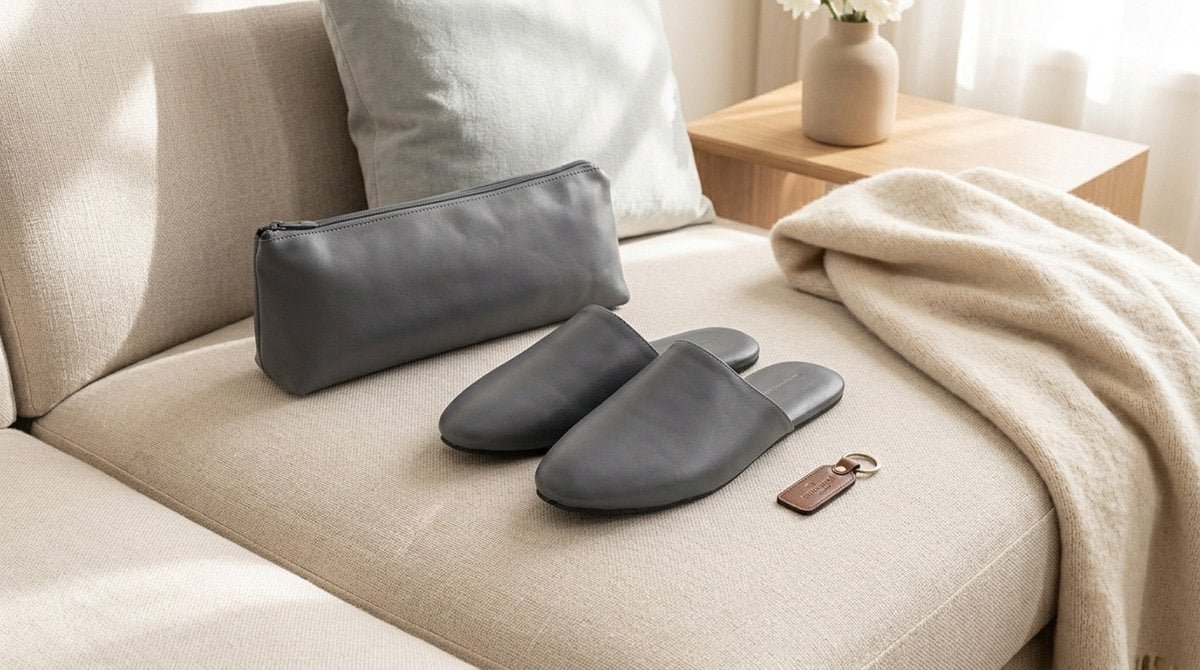
One Slipper Can Have Three Commercial Roles
The same hotel-inspired idea needs a different product and presentation for a guest room, a gift or a retail shelf.
JNP has supplied this type of footwear for high-end guest rooms, gifting and boutique retail. Before discussing color or logo placement, we first need to know which role the product must perform.
| Commercial role | What the customer is buying | What the brand must protect |
|---|---|---|
| High-end guest room | A memorable part of the stay | Comfort, visual consistency and the hotel experience |
| Gifting | A complete branded gesture | Presentation, packaging and perceived value |
| Boutique or independent retail | A product worth choosing and paying for | Fit, durability, display value and a clear retail position |
A guest-room product can be judged within the full hotel experience. A retail slipper must stand on its own beside other paid products. A gift must feel complete before the box is opened.
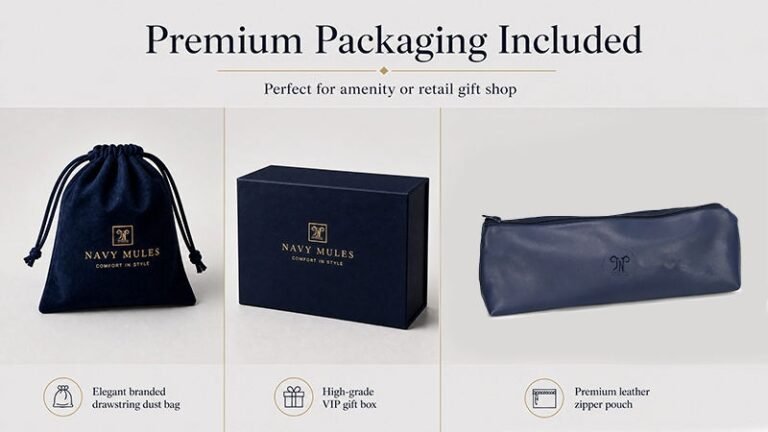
This is why a normal amenity slipper with a larger logo is not automatically retail-ready. Packaging is also part of the commercial role; our guide to slipper packaging options6 explains how a shoe box, black box or cloth bag changes the product presentation.
Ask Four Questions Before Adding the Category
A buyer can make the first go-or-no-go decision with four commercial questions before choosing a slipper construction.
| Question | A positive signal |
|---|---|
| Do our customers already buy sleep, bath, home-comfort or gifting products? | The slipper serves an existing customer rather than an unknown audience. |
| Can it carry our current material, color and price language? | The product will look like part of the brand, not a separate experiment. |
| Is its main role guest-room use, gifting or retail? | The team can define the right level of product and packaging. |
| Are we willing to build a retail product rather than add a logo to an amenity slipper? | The project can be developed around fit, durability and perceived value. |
At JNP, we use these answers to narrow the direction before showing products. A home-textile brand and a hotel boutique may both ask for a refined slipper, but they may need different sizing, soles, packaging and order structures.
The detailed choices belong to the next stage. The first decision is simpler: does the slipper extend the customer experience your brand already owns?
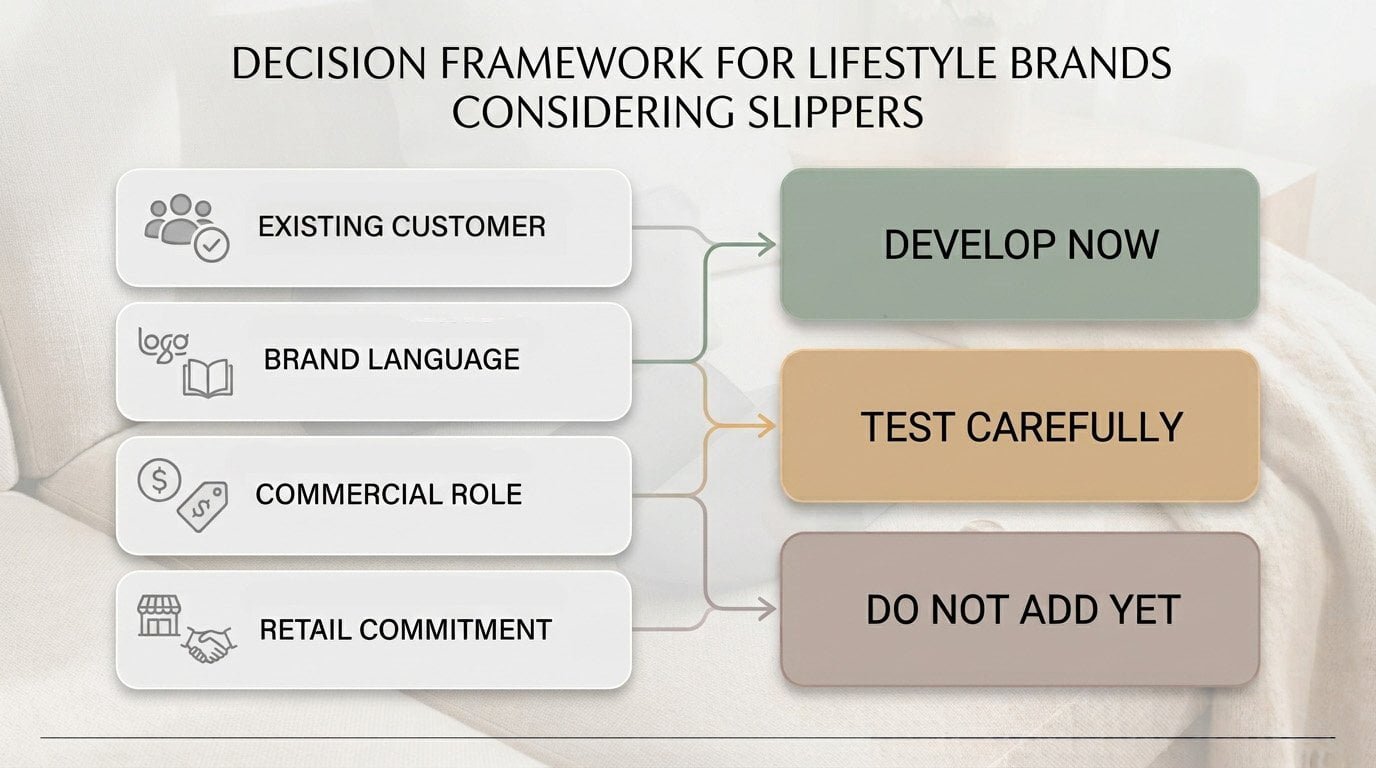
A popular category can be a useful signal, but popularity alone is not a product strategy. If your customers already buy comfort, home or gifting from you—and you can define a clear role for the slipper—the category is worth developing.
The next question is not whether to copy a hotel slipper. It is what type of slipper should become recognizably yours.
Footnotes
This official Frette product page gives readers a concrete example of how a hotel-inspired slipper can be developed as a premium retail product, including its materials, sizing and sole construction. ↩
This official Four Seasons at Home product page shows how a hospitality brand extends the hotel experience into a consumer-facing slipper with multiple sizes, premium materials and gifting-oriented presentation. ↩
This brand page provides an example of how a classic hotel slipper can be redesigned for broader lifestyle use with an outdoor-ready EVA outsole. ↩
Zara Home provides a useful merchandising example of slippers being presented alongside bathrobes and bathroom textiles, supporting the idea that slippers can naturally extend a home-comfort collection. ↩
Signoria Firenze demonstrates how hotel-inspired slippers can be coordinated with towels and bathrobes, giving readers an example of a broader bath and hospitality product ecosystem. ↩
JNP's packaging guide helps buyers understand how different packaging formats, such as shoe boxes, black boxes and cloth bags, can affect the presentation of slippers as retail or gifting products.</code></pre> ↩