A strong furry footwear collection does not ask every style to do the same job. One product may create attention, while the rest of the range makes the same idea easier to understand, wear and buy.
At JNP, we see collection planning as a translation process. A buyer may begin with one memorable material, print or silhouette, but the collection becomes commercially useful only when that idea can work across different customer needs without losing its identity.
This article starts after the trend decision has been made. If you are still deciding what the market direction means, our earlier analysis explains why furry footwear is becoming more feminine, versatile and wearable[^1].
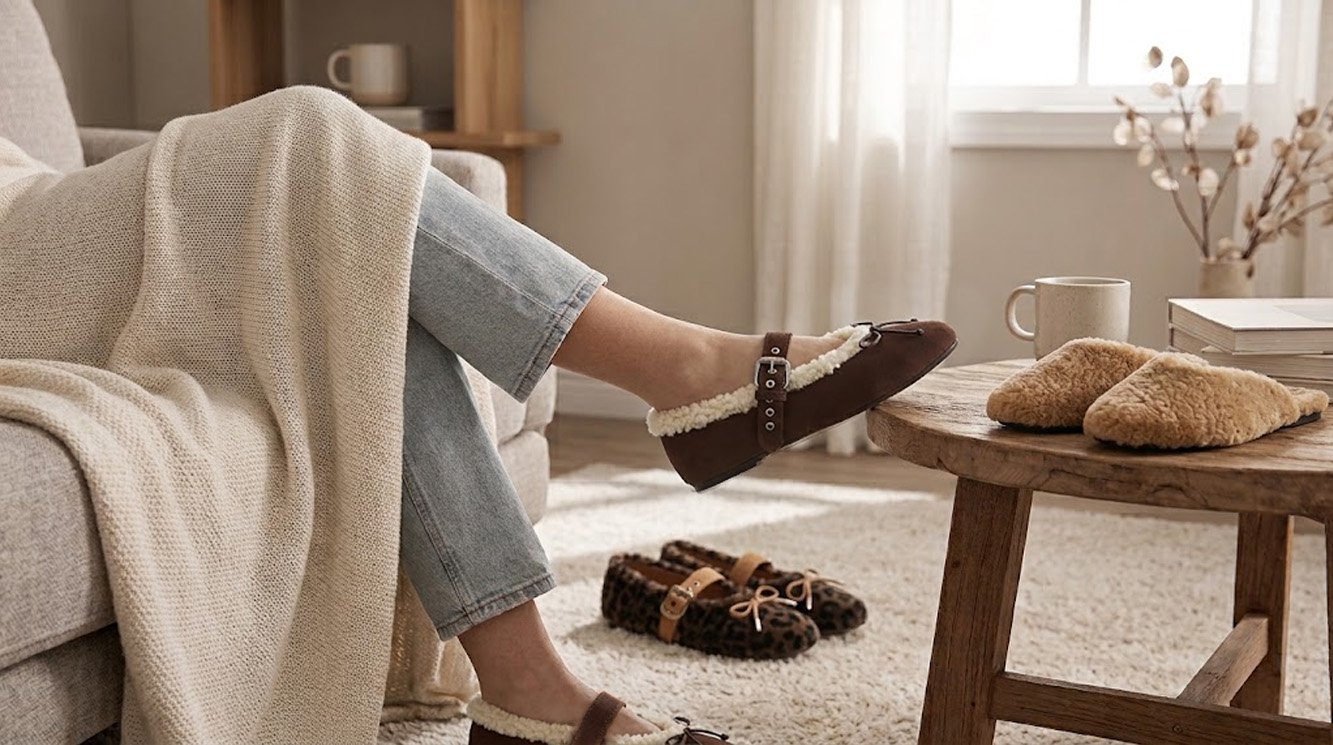
Start With One Product Idea, Not a Number of Styles
A coherent collection begins with one customer, one wearing context and one recognisable product idea—not a predetermined number of shoes.
For example, the shared idea might be a feminine indoor-outdoor direction expressed through tactile uppers, a defined toe and one delicate brand detail. The shoes do not need to have the same construction, but a buyer should be able to see why they belong together.
This is where a collection differs from a catalogue. A catalogue shows available products. A collection makes a clear proposal to a particular customer.
Arsutoria School's footwear collection programme[^3] describes collection planning as a balance between consumer profile, product and price levels, new trends, volume potential, carry-over and material or colour variations. For a smaller e-commerce test, the same principle can be applied without building a large range: define the commercial role before adding another style.
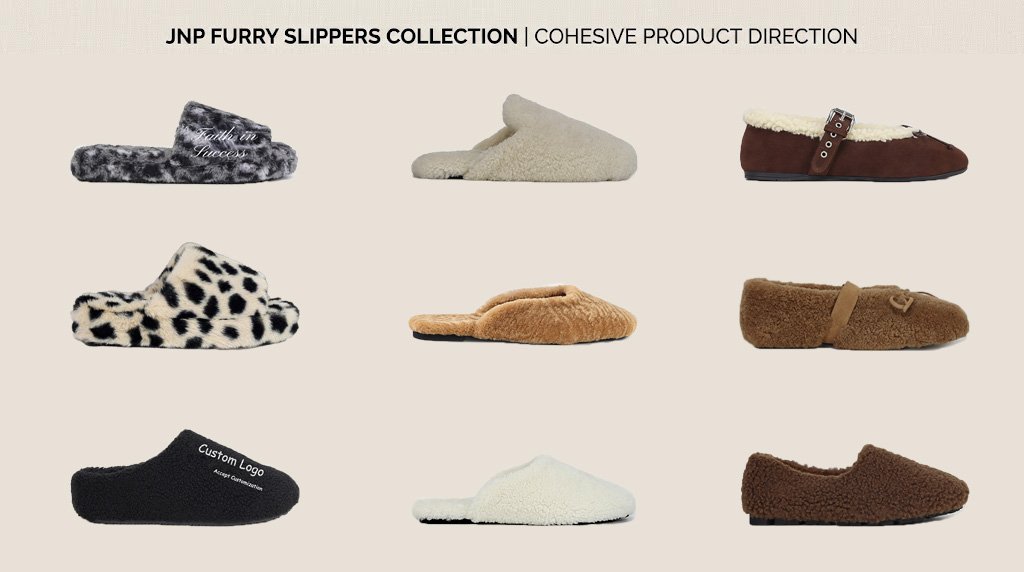
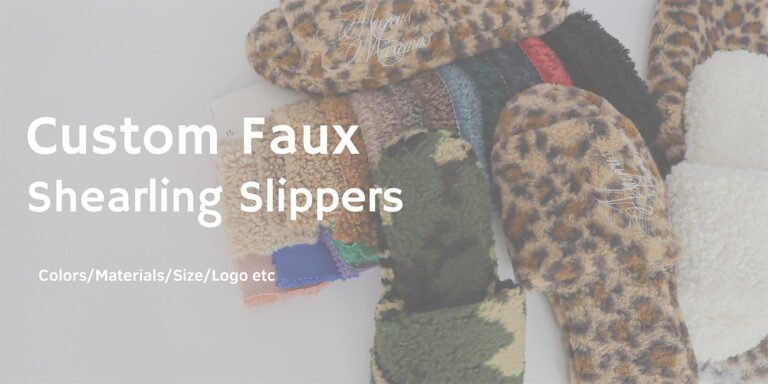
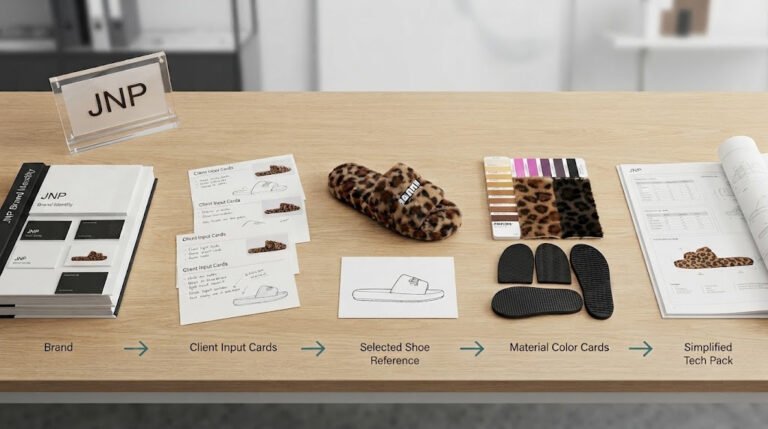
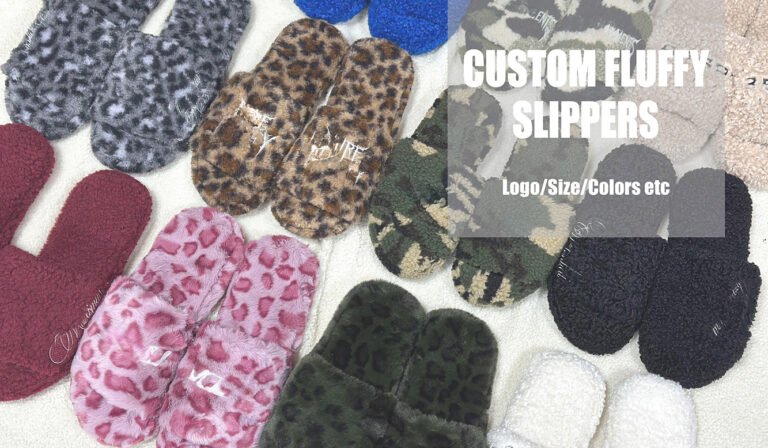
Alt Text: JNP furry slippers collection with varied silhouettes and a coherent product direction
Give the Hero Product One Clear Job
The hero product should make the collection recognisable, but it should not be expected to carry every sale.
Its strongest feature might be a high-contrast animal pattern, an unusual furry surface or a more expressive trim. This gives the brand a product that works in campaign images, social content and the first buyer conversation.
The mistake is to repeat every strong feature across the whole range. If every style has the loudest material, colour and trim, the collection can attract attention but leave customers with few easy buying options.
The hero product has done its job when people understand the idea. The next products should help more of the target audience enter that idea.
For a JNP presentation, the hero product can be shown larger or placed at the centre, with the related products arranged around it. The comparison should make one point visible: which element creates attention, and how the other styles carry that element in an easier form. The number of supporting products should follow the real collection, not become a fixed formula.
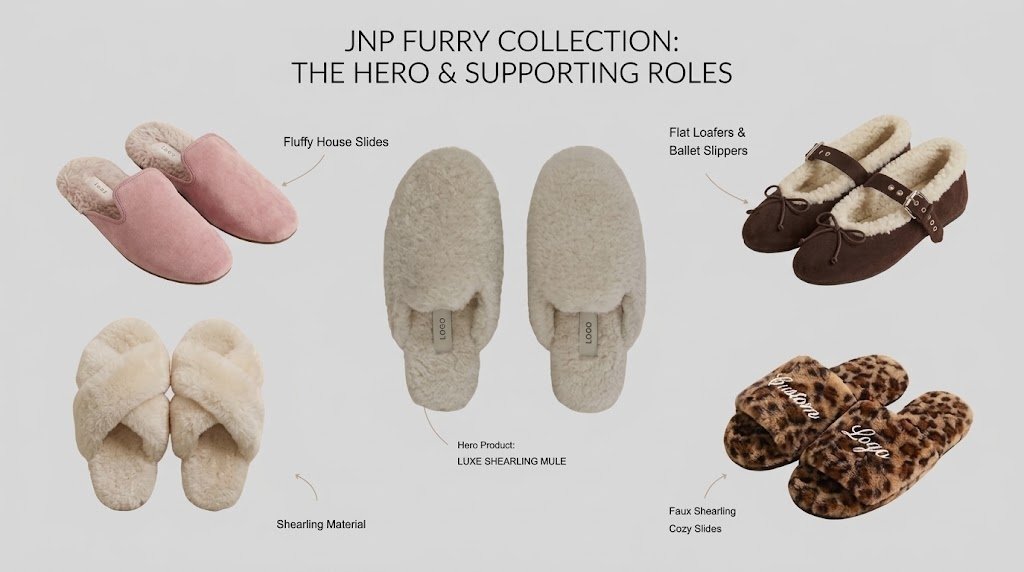
Alt Text: JNP hero furry footwear product compared with more wearable supporting styles
Translate the Idea Into Easier Commercial Products
Commercial styles should preserve the collection's identity while reducing the effort required to style, understand or purchase the product.
This does not mean removing everything distinctive. It means deciding which feature carries the recognition and which features can become quieter.
That balance matters when customers are becoming more selective. In McKinsey's 2026 fashion outlook[^6], 70% of consumers surveyed said they planned to spend less, while 80% showed value-seeking behaviour. A commercial translation therefore needs to make the product easier to justify, not simply less visually interesting.
| Collection role | What to preserve | What can become easier |
|---|---|---|
| Hero product | The strongest visual idea | The product does not need to suit every customer |
| Commercial style | One recognisable material, shape or detail | Colour, coverage or styling can be more familiar |
| Later extension | The elements proven by the first test | New colours, materials or constructions can wait |
A bold printed furry ballerina, for example, may lead the story. A more neutral version can retain the same silhouette and trim. Another style may carry the same material language into a familiar Mary Jane or refined mule.
The right translation depends on the brand's customer and channel. JNP would not treat a neutral colour as automatically commercial or an animal print as automatically risky. The question is whether the product still feels relevant to the people the brand can realistically reach.
Share the Production Base, Not the Visible Result
A collection can look varied to the customer while sharing stable production foundations behind the scenes.
The small-batch styles JNP discusses with customers are not selected at random from a stock-shoe list. We begin with market and customer needs, then work from footwear directions that have received repeat interest and have been improved through actual customer feedback.
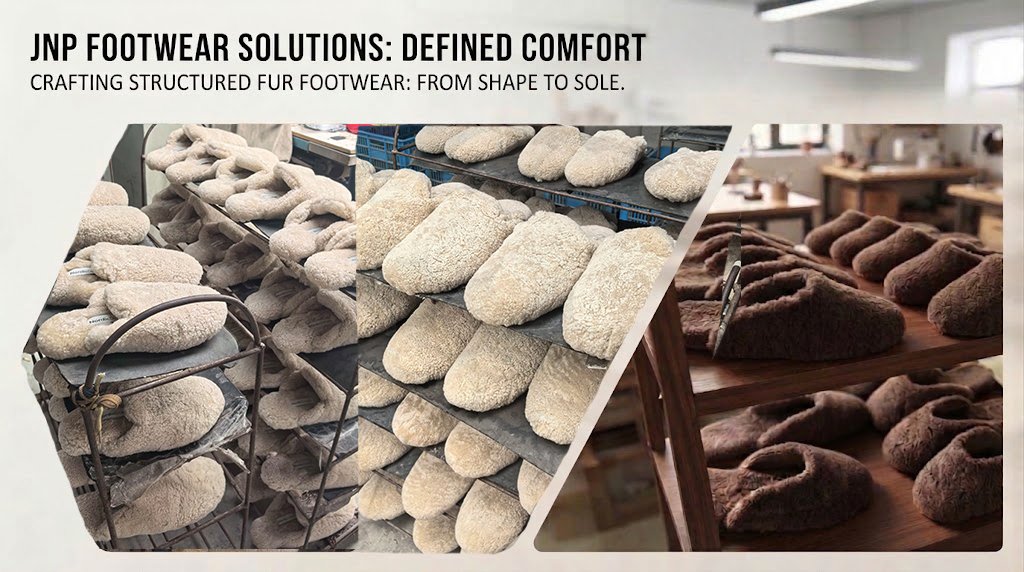
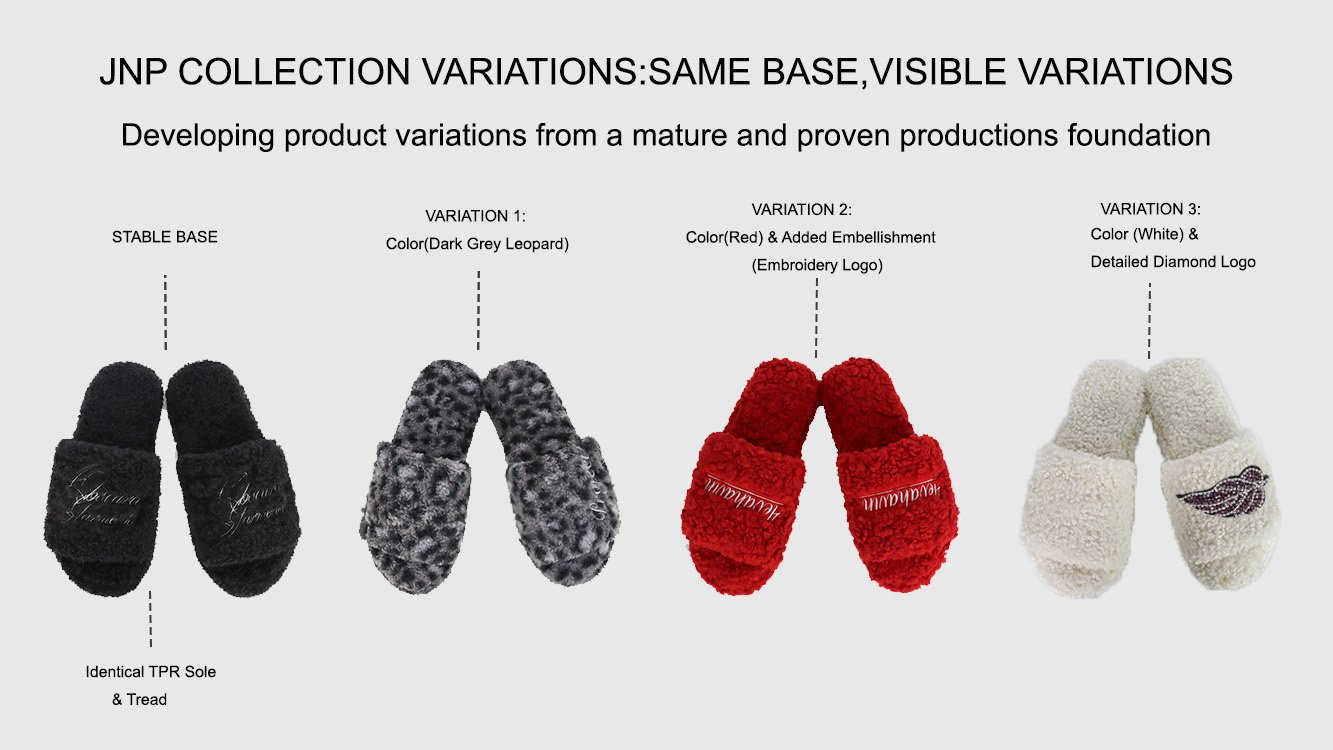
Where appropriate, several designs may share an existing last, outsole, pattern logic or established production method. The visible difference can then be concentrated in the upper material, colour, embroidery, trim, label or packaging—the parts the customer can recognise and value.
This is not a rule that every style must use the same base. If the hero idea depends on a new structure, forcing it onto an unsuitable construction can weaken the product. The practical aim is to separate the parts that create brand recognition from the parts that do not need to be redeveloped for every variation.
Let the First Test Decide What the Collection Becomes Next
The first collection does not need to answer every future product question; it needs to produce useful evidence for the next decision.
After launch, the brand can compare which style attracted clicks, which one received serious questions, which colours converted and where customers hesitated. Fit comments and size demand may support one action, while price resistance or weak conversion may support another.
That evidence can lead to a reorder, a new colour, a material change or an additional silhouette. It can also show that a proposed extension should stop. Both outcomes are useful when they prevent the brand from expanding a collection on assumption alone.
This is also how a public trend can gradually become a brand product. The hero style opens the conversation; the commercial range tests which parts customers will pay for; repeated feedback helps the brand keep and refine the elements that feel recognisably its own.
For buyers preparing a first order, the next step is to decide what to customise now and what to scale after the trial[^8]. JNP can review the reference direction, customer profile and intended channel, then help separate the details that should define the first collection from those that can wait for real market feedback.