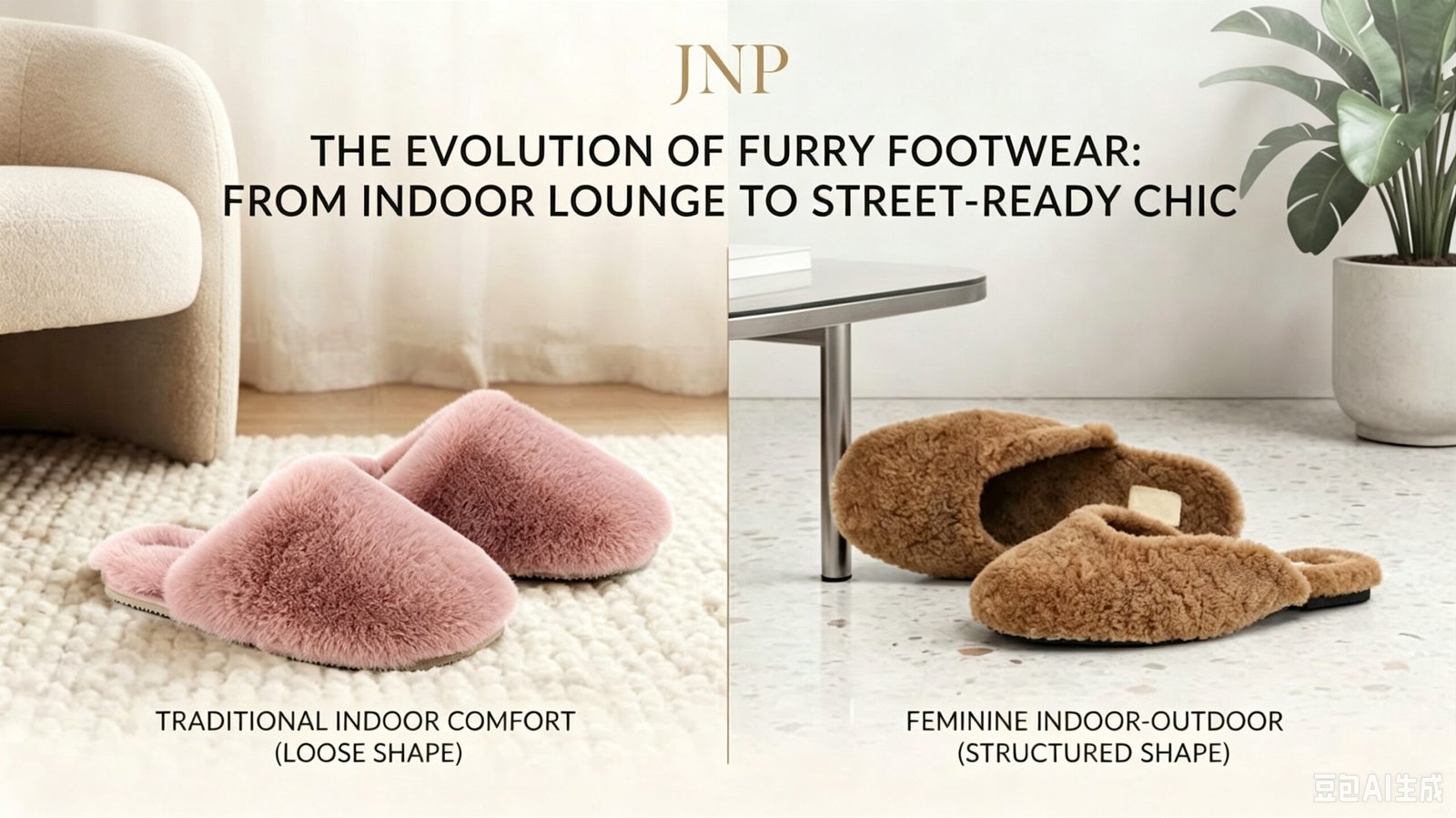
Furry indoor slippers are still relevant, but we are seeing a change in what buyers ask for. In JNP's recent customer conversations, fewer buyers are confirming purely indoor luxury slippers. More are exploring feminine, defined shapes that retain a soft feel while working across indoor and outdoor settings.
Current market signals point in a similar direction. Business of Fashion's Autumn/Winter 2026 shearling report1 reported that shearling use on Autumn/Winter 2026 runways rose by more than 500% year over year, while faux fur, bouclette and pony hair increased by a combined 20%. These figures show that tactile materials remain visible, but they do not give every brand the same product answer. A more practical question is what kind of shoe these materials are becoming.
Are Furry Slippers Still Popular in 2026?
Furry footwear remains visible in 2026, although the clearest signals are concentrated in specific materials and more refined silhouettes.
Marie Claire's report on Chanel pony-hair flats2 noted that Lyst searches for Chanel pony-hair flats increased 103% quarter over quarter. That figure shows strong interest in one tactile, highly visible product direction; it does not prove that every furry slipper category is growing at the same rate.
This distinction matters in JNP's customer conversations. Buyers are not simply asking for more fur or a heavier indoor slipper. Their interest is moving toward products that combine a noticeable texture with a clearer footwear shape.
Why Is the Use Occasion Moving Beyond the Home?
In JNP's recent customer conversations, interest is shifting from indoor-only slippers toward footwear that combines comfort with everyday versatility.
JNP is seeing fewer customers confirm purely indoor luxury slippers and more interest in products that can work both indoors and outdoors. The soft, comfortable feeling is still important, but buyers also want the product to look appropriate beyond a bedroom or lounge setting.
Broader footwear data points in the same direction. Circana's Q1 2026 U.S. footwear report3 found that products linked to daily use, casual comfort and multiple occasions were better positioned to capture consumer spending. The AlixPartners–FDRA 2026 Footwear Survey4 also found that consumers increasingly define casual footwear through versatility and everyday use.
This does not mean that an indoor-outdoor product is suitable for every surface or weather condition. It is helpful to define the intended wearing occasion early, then consider how the silhouette, outsole and material placement can support it.
What Makes a Furry Slipper Look More Feminine?
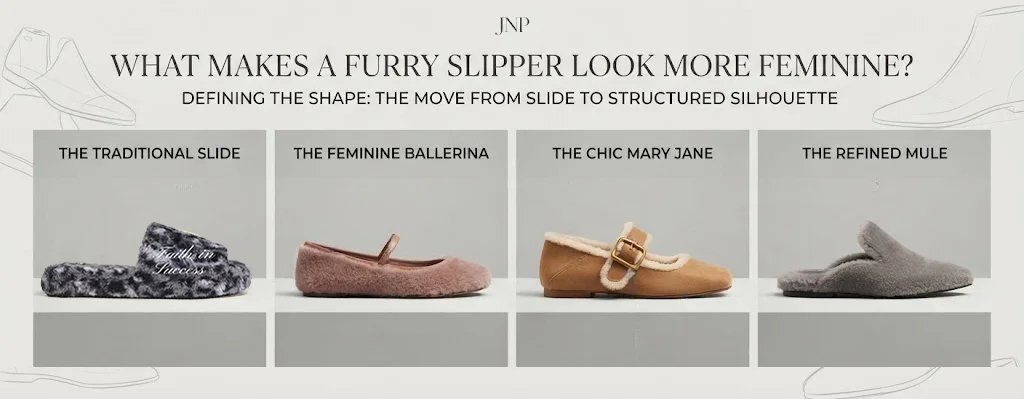
A more feminine furry shoe begins with a defined silhouette, not simply with added decoration.
The change JNP is hearing from customers is a move away from loose, flat slide shapes. A ballerina-derived shape has a clearer toe, a more complete upper and a closer relationship to the foot. A slim strap, small buckle or delicate bow can reinforce that direction, but the underlying shape comes first.
Current luxury products make this change easy to see. Prada's shearling ballerina5 combines a soft, voluminous surface with a defined ballerina shape, leather strap and thin rubber sole. A current Miu Miu shearling-lined ballet flat6 uses a round toe, buckle fastening, delicate bow and rubber sole.
These products are market references rather than designs to copy. Their relevance is the product logic: a strong tactile material becomes easier to style when it is placed on a recognizable, feminine shoe shape.
Why Does a Familiar Shoe Shape Matter?
A familiar silhouette can give consumers an understandable way to wear a material that is already visually strong.
Furry, shearling and pony-hair surfaces can quickly become the main visual feature of a shoe. When the underlying shape is a ballerina, Mary Jane, loafer or refined mule, the consumer already understands how the product fits into a wardrobe.
This is especially relevant for independent brands selling in the $100–$180 retail range. The challenge is to make the product feel more considered than a low-priced fashion copy while keeping it wearable enough to justify the purchase. A clearer shape may provide that balance without turning the shoe into a single-occasion statement.
How Is This Shift Appearing in JNP's Current Production?
The furry footwear styles JNP has produced in 2026 reflect the same move toward clearer silhouettes and indoor-outdoor use.
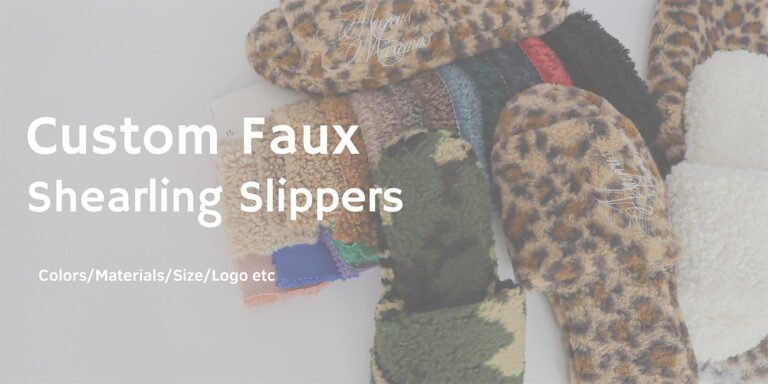
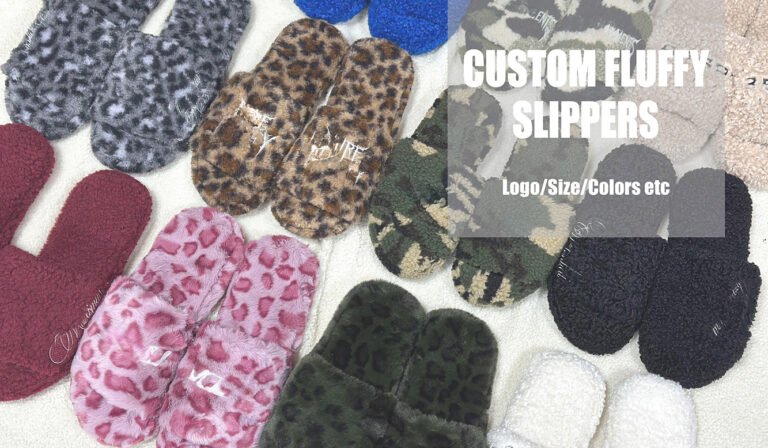
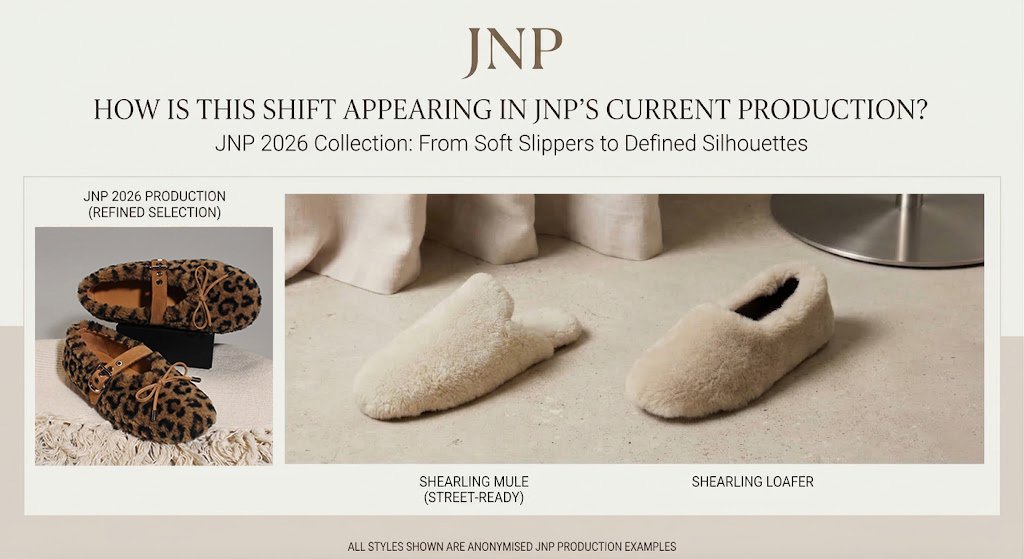 JNP's current production examples are not limited to loose indoor slides. The relevant styles use more defined footwear shapes and combine the soft visual quality of furry materials with a product that looks more complete on the foot.
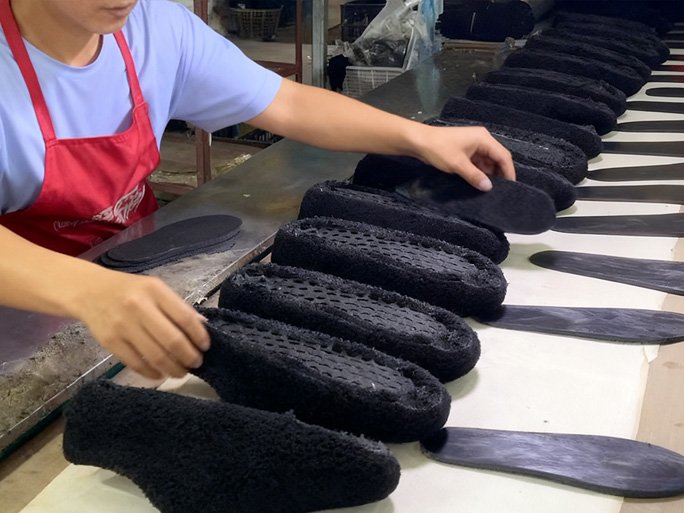
The production images in this section illustrate JNP's practical experience with this direction; they are not presented as proof of market-wide sales. They can help buyers compare the finished silhouette, upper shape, outsole direction and the way the furry material sits within the complete product.
Furry indoor slippers have not disappeared. The change is that buyers increasingly want the same tactile comfort in a more defined, feminine and versatile shoe. For a footwear brand, a useful starting point is not how much fur to add, but who will wear the product, where it will be worn and which silhouette can make that use feel natural. JNP can share relevant product and production experience, then work with the buyer to discuss suitable shapes, material directions and development options for the target customer.
Footnotes
Business of Fashion's Autumn/Winter 2026 shearling report provides runway data showing increased visibility of shearling, faux fur, bouclette and pony hair. This helps readers understand the broader trend toward tactile materials while distinguishing that trend from the performance of any single furry slipper category. ↩
Marie Claire's report on Chanel pony-hair flats cites a 103% quarter-over-quarter increase in Lyst searches for the product. This gives readers a concrete consumer-interest signal for pony-hair footwear and contextualizes the continued relevance of tactile materials. ↩
Circana's Q1 2026 U.S. footwear report provides current footwear-market data and context around consumer spending, casual comfort and everyday footwear use. It helps readers understand the broader market conditions behind the shift toward versatile products. ↩
The AlixPartners–FDRA 2026 Footwear Survey provides industry survey data on consumer footwear preferences, including the importance of versatility and everyday use. It gives readers broader evidence for the article's discussion of casual footwear. ↩
Prada's shearling ballerina provides a current luxury product reference showing how a soft, tactile material can be applied to a defined ballerina silhouette with a leather strap and thin rubber sole. This helps readers visualize the relationship between material and feminine footwear shape. ↩
Miu Miu's shearling-lined ballet flat provides another current luxury product reference, combining a tactile upper with a round toe, buckle, bow and rubber sole. This helps readers understand how recognizable feminine details can make a furry or shearling product feel more structured and wearable. ↩