Can a Familiar Winter Boot Feel Distinctive with Custom Printing?
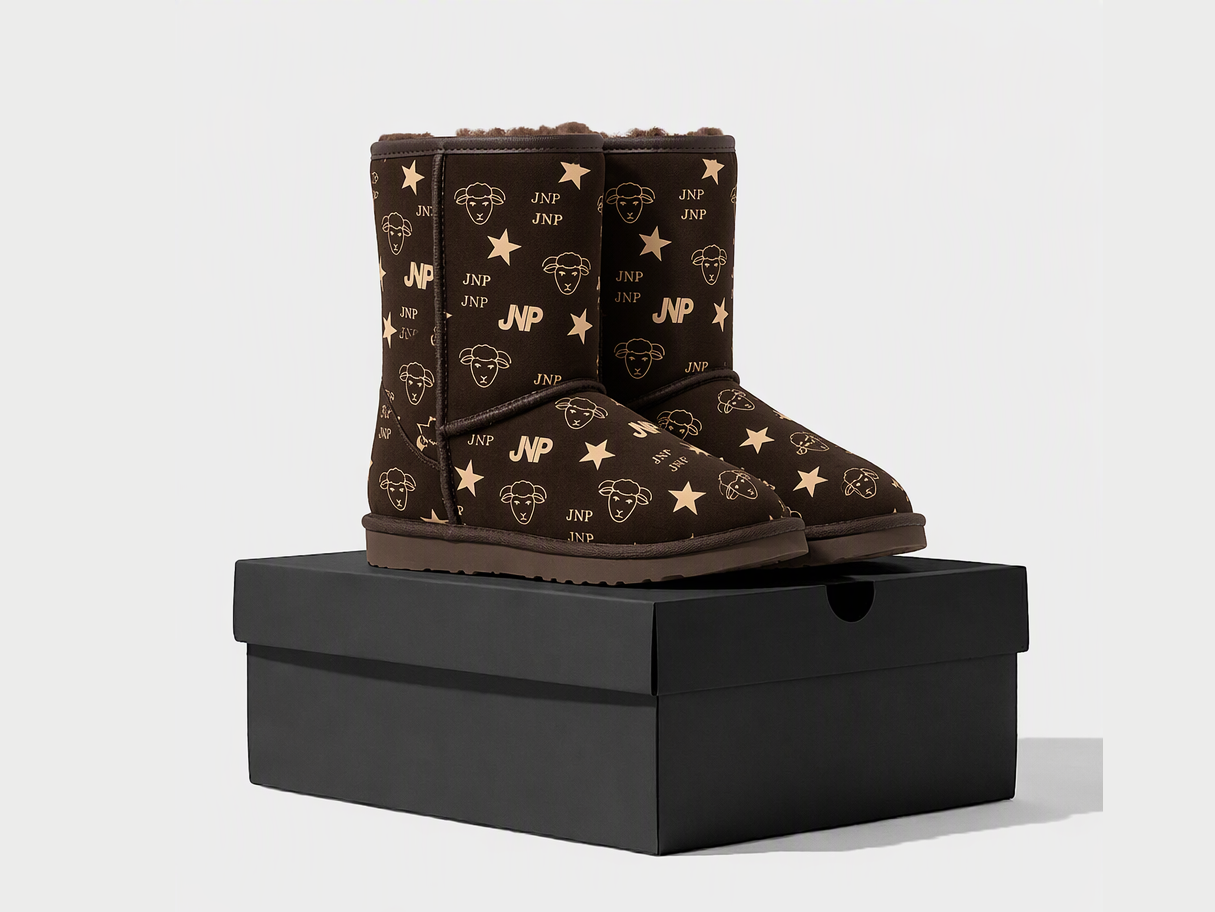
Yes. JNP can now offer a new printing method that adds a brand’s own pattern to a familiar mid-calf winter-boot silhouette. In one buyer project, the brand selected a base colour first, and the MOQ was 100 pairs for that project only. The goal was to give a familiar shape a visual identity the brand could call its own, without developing a completely new boot.
As a footwear supply chain manager, JNP works with brand buyers to coordinate product development and production. Our custom boots video shows a winter boot with a pattern printed directly on the upper.
Can a Familiar Winter Boot Still Feel Distinctive to Your Brand?
A familiar winter boot can still feel distinctive when its surface design gives the upper a clear point of view.
For some collection briefs, the boot outline already feels right. A buyer may want a winter style that fits the collection, but does not want to reopen every design decision just to make the product feel individual.
Design guidance treats silhouette and surface pattern as separate elements: Utah State University Extension’s guide defines silhouette as an item’s overall outline and explains how a pattern can change a design’s visual character. In this JNP project, the buyer wanted to keep the familiar mid-calf form while adding a pattern designed for the brand. The shape stays recognizable; the custom print gives the upper a more individual point of view.
Why Did the Earlier Print Methods Fall Short?
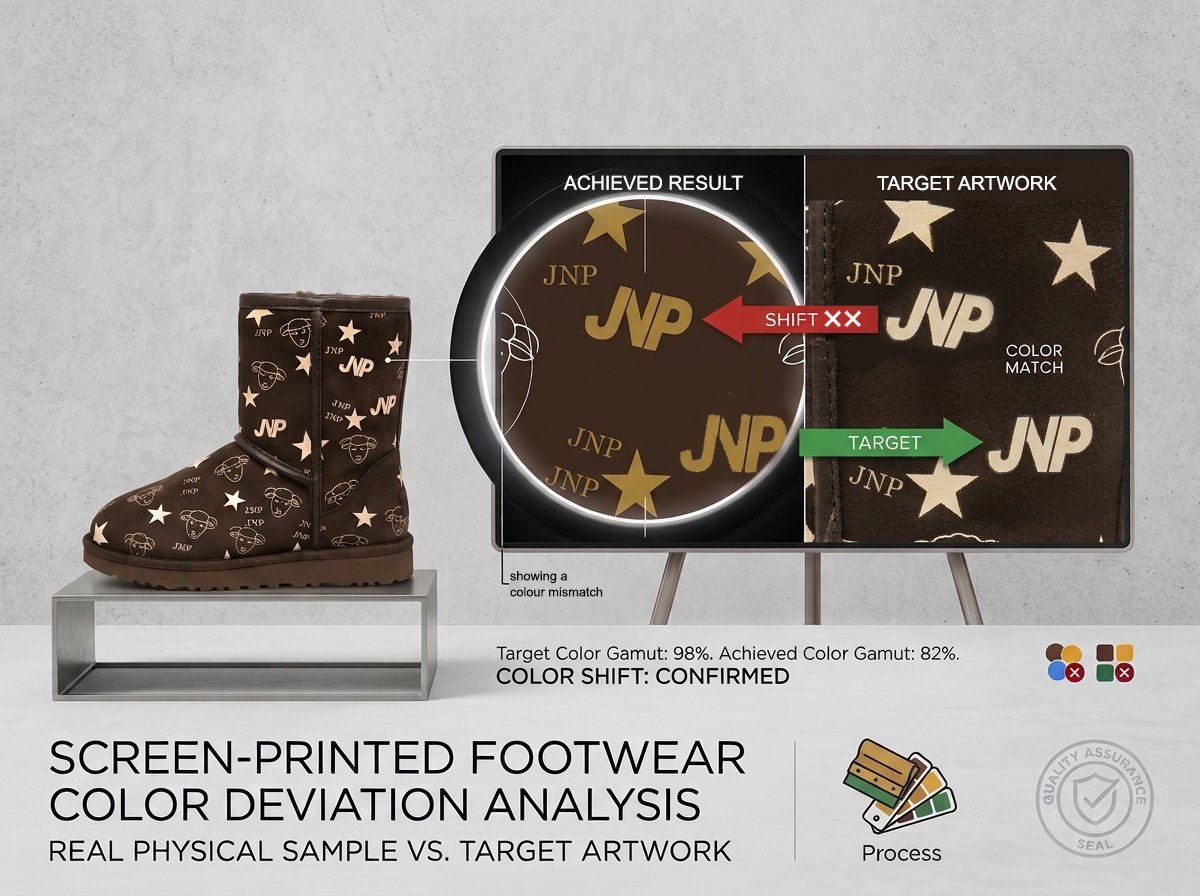
Each earlier route missed a different part of the buyer’s brief: heat transfer raised a peeling concern, screen printing did not give the desired colour control, and the minimum for all-over suede printing was too high.
In earlier development discussions, customers gave us three distinct reasons to hesitate about the routes they had considered. Some worried that heat-transfer printing1 graphics might peel; screen printing2 did not provide the colour control they wanted; and the minimum for all-over printed suede material3 exceeded the quantity they planned to order.
These are project-specific buying concerns, not a claim that heat transfer or screen printing always performs poorly. The difficulty was finding a route that could meet the buyer’s design and colour needs at an order quantity they could accept.
How Can a Brand Add a Distinctive Pattern Without Starting from Scratch?
JNP can keep the familiar boot shape, apply a selected base colour, and use our new printing method to add the brand’s own pattern to the upper.
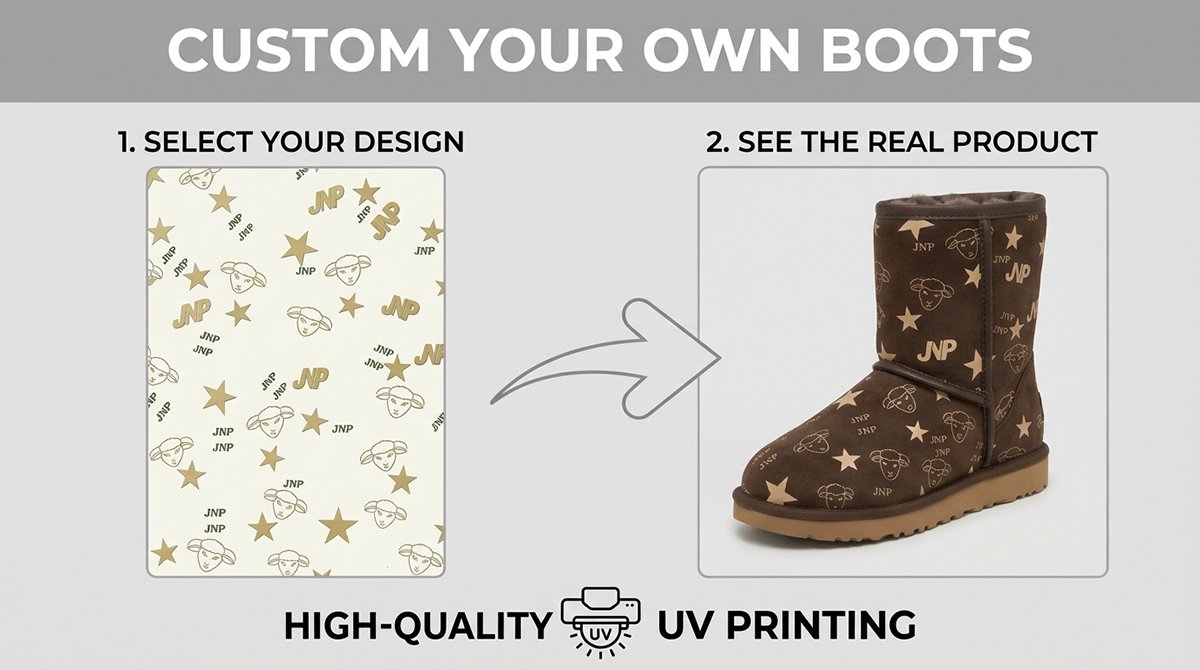
This route starts with the colour field the buyer wants and builds the design on it. JNP can help the brand give the familiar silhouette its own surface identity, rather than starting with a completely new boot.
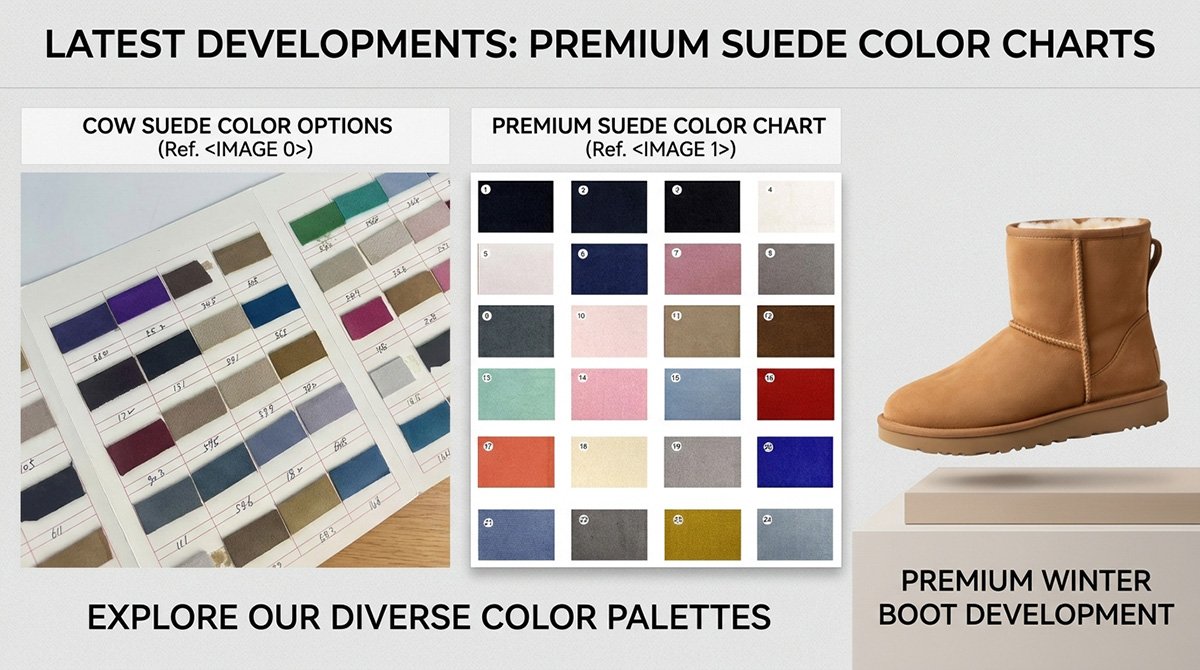
In the buyer project discussed here, the MOQ for this base-colour-and-print option was 100 pairs. For this product, the print does not fade, and colour control is better than with the earlier options discussed. Colour fastness4 is an important consideration when evaluating printed footwear materials.
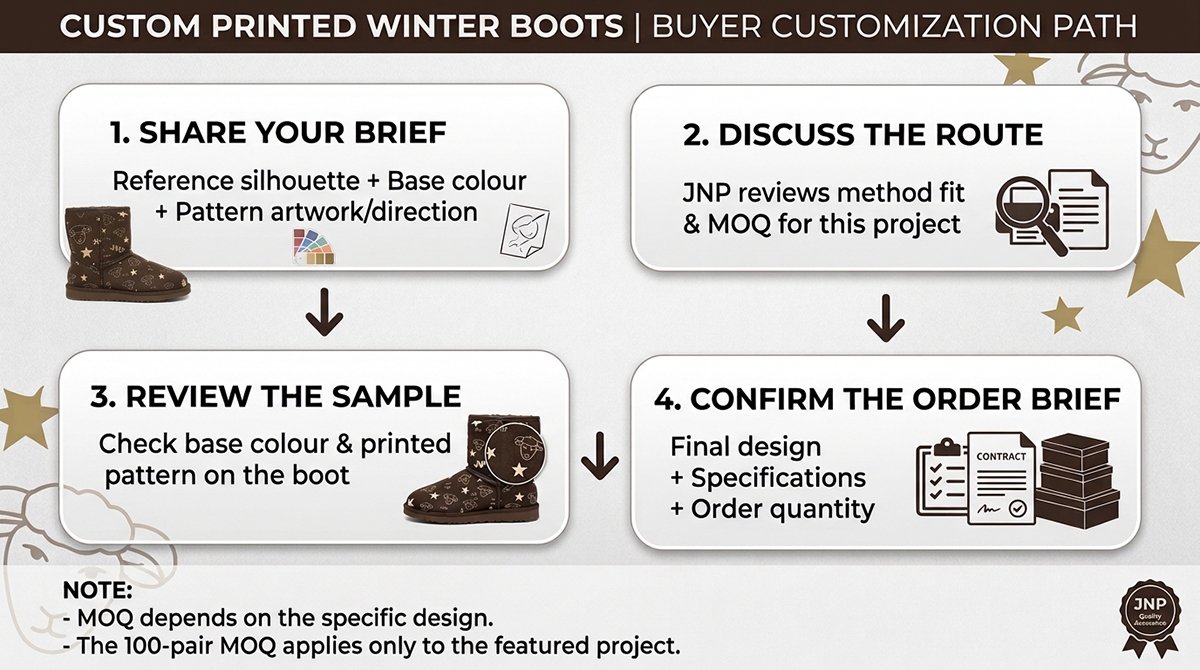
The 100-pair quantity is specific to this project; it is not a universal MOQ for every boot or custom print.
The actual sample still matters. It lets the buyer see how the selected background and artwork work together on a curved boot upper, rather than judging the pattern as a flat graphic. Custom footwear sampling5 allows buyers to review the appearance and specifications before confirming bulk production.
The final MOQ and print requirements should be confirmed for the chosen design and specifications.
If your team is deciding which details to customise now and which to develop later, see our guide to what to customise now and what to scale later.
To make the first discussion clearer, prepare three inputs: a reference silhouette, your preferred base colour, and the pattern artwork or design direction. JNP can then discuss whether this customisation route fits the design and the quantity you are planning.
Footnotes
Heat-transfer printing is a decoration process that transfers graphics onto a material using heat and pressure. Understanding the process helps footwear buyers evaluate print adhesion and potential peeling concerns. ↩
Screen printing is a printing technique that transfers ink through a mesh screen. Understanding the process and its colour-control considerations helps buyers evaluate whether it suits their desired footwear design. ↩
Suede is a leather material characterised by its soft, napped surface. Understanding its material properties helps footwear buyers evaluate its appearance and suitability for winter boot applications. ↩
Colour fastness refers to a material's ability to retain its colour when exposed to factors such as washing, rubbing, light, or other environmental conditions. Understanding colour fastness helps buyers evaluate the durability of printed footwear designs. ↩
Custom footwear sampling is the process of producing and reviewing a physical product sample before bulk production. It helps buyers check materials, colours, patterns, construction, and specifications before confirming an order. ↩